UPI Payment





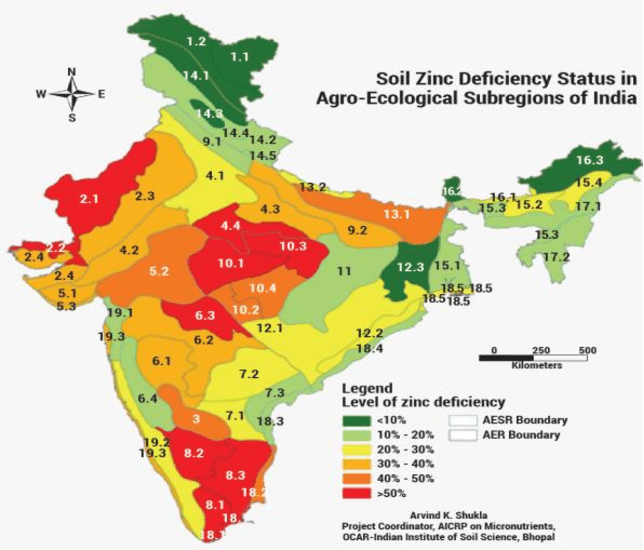
Zinc (Zn) is an essential micronutrient required for plant growth, enzyme activity, and metabolic regulation. It plays a key role in protein synthesis, nitrogen metabolism, and auxin production. Despite its importance, zinc deficiency is one of the most widespread micronutrient disorders globally, particularly in India, where nearly 50% of agricultural soils are deficient in available zinc, despite using zinc fertilizers as corrective measures over the year.
Farmers have traditionally relied on inorganic zinc sources such as zinc sulphate (ZnSO₄) and zinc oxide (ZnO) to correct this deficiency. However, these inputs often fail to provide lasting benefits because more than 90% of applied zinc becomes immobilized in soil due to precipitation as zinc hydroxides, carbonates, phosphates, or sulfides, depending on soil pH and redox conditions. As a result, zinc remains unavailable to plants, leading to persistent yield losses, reduced nutritional quality of produce, and micronutrient malnutrition in human and animal populations.
Excessive application of macronutrient fertilizers (N, P, K) without balanced micronutrient management further aggravates zinc unavailability. This necessitates eco-friendly, cost-effective, and biologically sustainable alternatives for improving zinc bioavailability in agricultural soils.
Recent advances in microbial biotechnology highlight the potential of Zinc Solubilizing Bacteria (ZSB) as a sustainable strategy for alleviating zinc deficiency. ZSB strains belonging to Pseudomonas, Bacillus, Rhizobium, Azospirillum, and Gluconacetobacter are known to:
Thus, ZSB not only increases zinc bioavailability but also contributes to soil fertility, plant growth promotion, and nutritional enrichment of food grains.
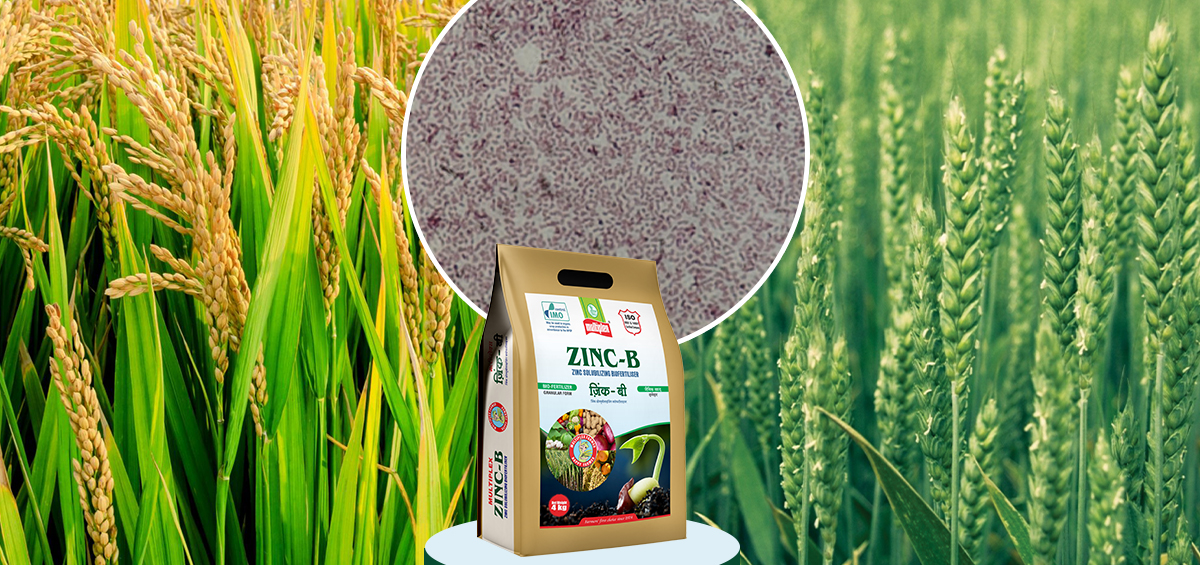
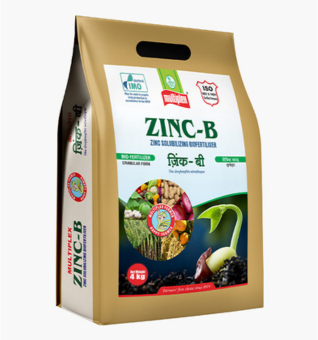
Multiplex Zinc-B, when given along with other zinc fertilizers it improves the zinc availability and plant growth. One of the primary mechanisms is pH buffering, where the microbes secrete organic acids that buffer the rhizosphere pH, thereby enhancing zinc solubility and availability. In addition, the microorganisms produce chelating agents and siderophores, which bind to insoluble zinc compounds and convert them into soluble, plant-available forms through chelation and complexation.
Beyond zinc solubilization, Multiplex Zinc-B plays a vital role in nutrient mobilization, improving the uptake of not only zinc but also phosphorus, nitrogen, and other essential micronutrients. It also contributes to plant protection by producing antimicrobial metabolites that suppress soil-borne pathogens and by triggering induced systemic resistance (ISR), which strengthens the plant’s natural defense mechanisms. Ultimately, this integrated action results in yield enhancement, as improved zinc uptake boosts photosynthesis, enzyme activity, biomass accumulation, and grain quality, ensuring healthier crops with higher productivity.
For maximum efficiency, a minimum bacterial population of 10⁷ CFU/g soil is required in the rhizosphere. Recommended application:
To optimize results, 50% of the recommended zinc fertilizer should be co-applied:
This integrated approach ensures synergistic effects between chemical zinc sources and biological solubilization, leading to sustained zinc availability throughout the crop cycle.
| Crop | Zinc Deficiency Symptoms | Benefits of ZSB Application |
|---|---|---|
| Rice | Zinc is unavailable under submerged conditions; yield loss up to 80% | 12–17% increase in grain & straw yield; 15–20% higher grain Zn content; improved tillering and biomass |
| Wheat | Leaf chlorosis, stunted growth, poor nutritional quality | 31% yield improvement; higher grain protein; enhanced Zn translocation |
| Maize | Stunted growth, nutrient stress | 25% increase in shoot dry weight; 30% increase in root biomass; stronger growth |
| Turmeric | Low rhizome productivity | 21.6% higher rhizome yield; better N, P, K, Cu, Mn availability |
| Soybean | Common Zn and P deficiency | Higher IAA production, better branching; improved seed weight and Zn content |
| Moong bean | Stunted growth and poor growth | Better growth and higher economic returns |
| Onion | Stunted growth, twisted stalks, leaf yellowing | Improved Zn uptake, higher yield & bulb quality |
| Tomato | Reduced fruit yield & quality | 15% higher fruit yield; improved Vitamin C & Lycopene; more flowers & fruits |
| Cucumber | Poor nutrient uptake | 20% more fruit yield; improved micronutrient content |
| Mustard | Stunted growth | Higher yield with ZnSO₄ + ZSB application |
| Cotton | Poor Zn and P uptake | Improved growth, yield, and soil fertility |
| Lentil | Low protein & zinc content | 10% higher protein; 15% higher Zn in grains |
| Ginger | Low height, rhizome yield | ZSB + ZnSO₄ improved rhizome productivity |
| Groundnut | Reduced yield & profitability | Improved pod yield, haulm yield, and B:C ratio |
| Sugarcane | Poor growth under Zn deficiency | Improved Zn uptake, cane yield, and lowered input costs |
Zinc deficiency continues to be a major constraint in Indian agriculture, causing yield losses, poor grain quality, and malnutrition in humans and livestock. Conventional zinc fertilizers alone are often ineffective due to soil fixation. Multiplex Zinc-B, enriched with zinc-solubilizing bacteria, provides a scientifically proven, eco-friendly, and sustainable solution to overcome this challenge.
By enhancing zinc bioavailability, improving crop productivity, and enriching nutritional quality, Multiplex Zinc-B not only supports farmer profitability but also contributes to food security and human health.