UPI Payment





Roses, known as the "Queen of Flowers," are widely cultivated in India for their beauty, fragrance, and economic value. Major growing regions include Karnataka, Maharashtra, Tamil Nadu, and West Bengal. However, rose cultivation faces serious challenges, especially from bacterial diseases. One major threat is Crown Gall, caused by Agrobacterium tumefaciens. This disease causes tumor-like growths on roots and stems, weakening plants and reducing yield. It often spreads silently through infected soil, tools, or planting material. Timely identification, proper sanitation, and preventive measures are crucial to manage Crown Gall effectively. Understanding this disease is vital to protect and sustain healthy rose cultivation.
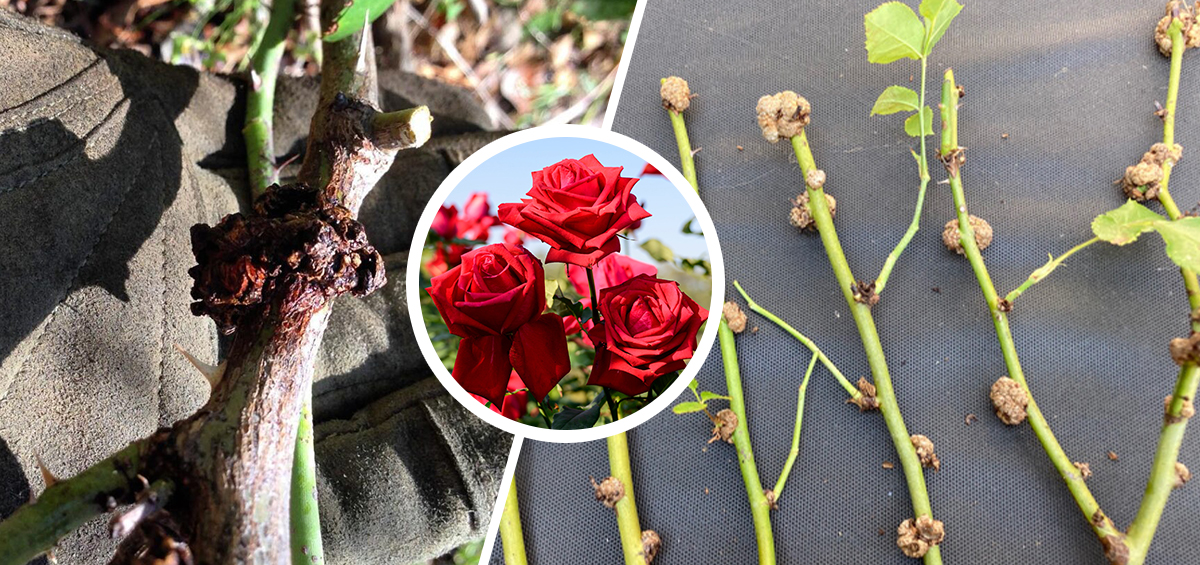
Crown gall is a bacterial disease caused by Agrobacterium tumefaciens, affecting roses and many other plants. It forms tumor-like swellings or galls on stems, crowns, roots, and branches. The bacterium inserts its genes into plant cells, causing uncontrolled tissue growth. Initially soft and pale, galls harden and darken over time, eventually restricting water and nutrient flow by girdling stems, which weakens or kills the plant.
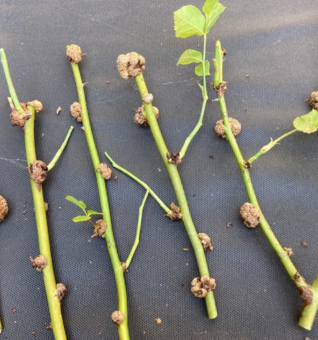
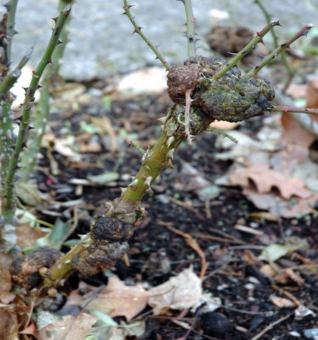
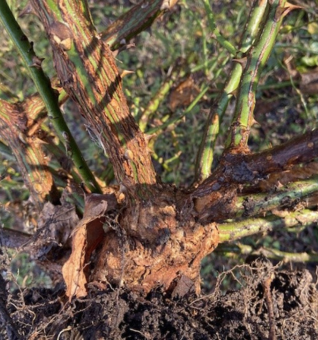
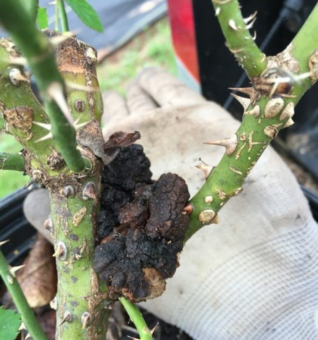
The bacterium enters through wounds from pruning, transplanting, pest damage, freezing, or mechanical injuries. Once inside, it integrates its DNA into the plant, triggering uncontrolled cell growth. It spreads through contaminated soil, water, tools, and infected plant material. Mature galls release bacteria back into the soil, increasing risk to nearby plants.
Crown gall is a global concern and affects major rose-growing regions in India, including Uttar Pradesh, Tamil Nadu, Maharashtra, Karnataka, and Punjab. Warm, moist conditions in nurseries and farms favor its spread, making prevention and early detection vital.
Effective management of crown gall involves cultural, mechanical, biological, and chemical strategies:



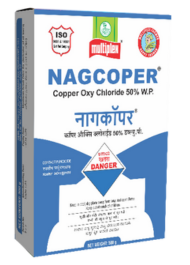

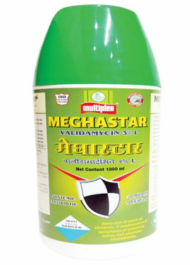
Preventing crown gall is the most effective management strategy.