UPI Payment





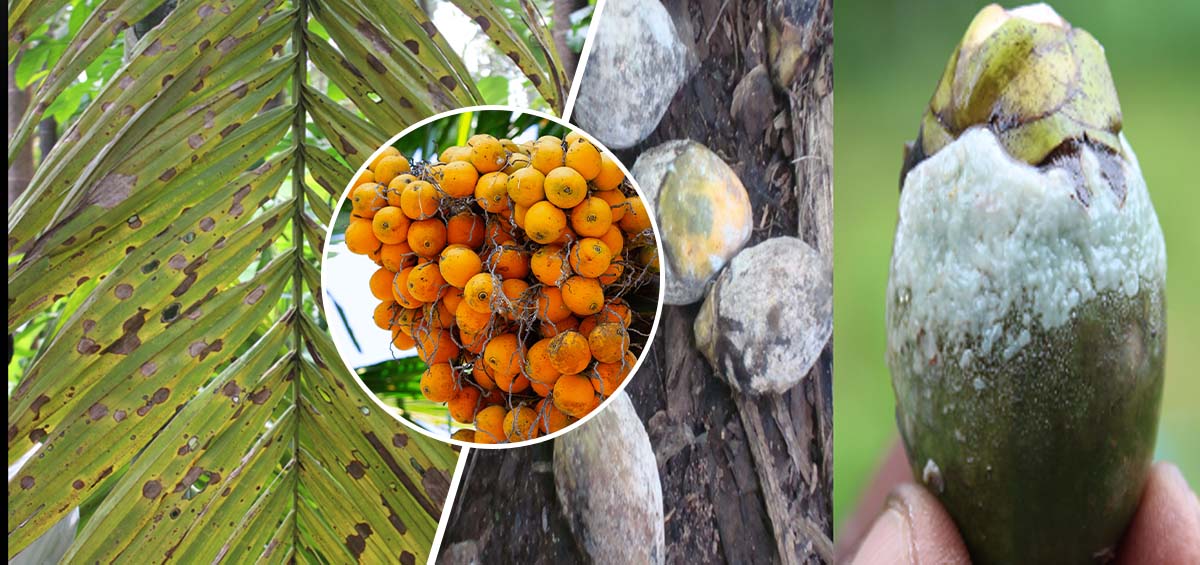
Arecanut, or betel nut, is a lifeline crop for millions of farmers in Karnataka, Kerala, Assam, and Tamil Nadu. Arecanut is in high demand for chewing, traditional rituals, and industries like pan masala and ayurveda. But this time, the severity of the monsoon and extreme fluctuations in climatic conditions have worsened the situation, as plantations are under attack by fungal diseases like Fruit Rot (Koleroga), which wipes out 10–90% of yields, with some areas losing nearly half the crop despite repeated sprays and Leaf Spot, which is also spreading rapidly, reaching over 80% severity in some places. Together, they’re reducing this year’s harvest and weakening palms for the next season, making timely disease control more important than ever.
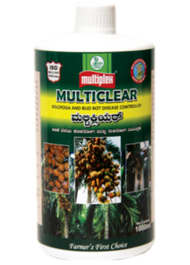
Also known as Koleroga or Mahali disease, it is one of the most destructive threats to arecanut during the monsoon, especially in Karnataka’s major growing belts. Caused by the fungi Phytophthora meadii and P. palmivora, the disease spreads rapidly in conditions when heavy, continuous rains are associated with high humidity above 90% and 20–23 °C temperature. The fungus spreads quickly as rain-splash and winds carry its spores, while the infected fallen nuts on the ground act as silent reservoirs for future outbreaks. Without proper pre-monsoon management, farmers can face huge yield losses often between 50% and 90% making fruit rot not just a seasonal problem, but a serious threat to livelihoods.
Fruit rot (Koleroga) often starts quietly, with small water-soaked patches near the base of young nuts. At first, they look harmless, but within days, these spots turn dark green and quickly spread over the whole nut. Soon, the nuts begin to rot from the inside, and one of the clearest warning signs is a sudden, heavy drop of nuts. Fallen nuts often show a white, cotton-like growth, a clear sign of fungal attack.
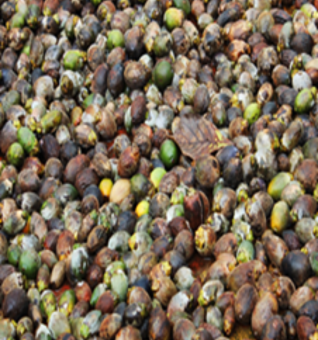
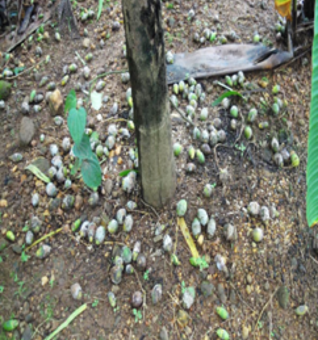
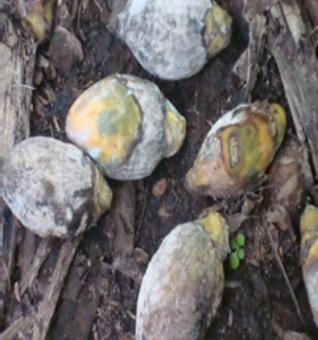
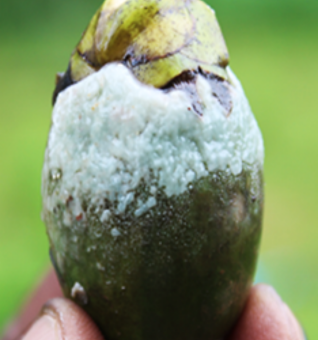
This disease usually strikes 15–20 days after the southwest monsoon begins, and the risk shoots up when rains are long and humidity is high. That’s why this period is crucial for farmers to keep a close eye on their crop and start preventive sprays on time.
Leaf spot is fast emerging as a serious problem for arecanut farmers, especially in India’s coastal belts and Karnataka’s Malnad region. Caused by fungi like Colletotrichum gloeosporioides, Phyllosticta arecae, and Pestalotia arecae, it attacks both young seedlings and mature palms, with peak activity during the monsoon. The disease thrives in warm, humid conditions (20–30 °C) and spreads quickly through rain splashes and wind-borne spores especially in dense, shady plantations with poor air movement.
While it may fade in the dry season, it often returns with the next wet spell. In severe cases, farmers have reported yield losses of over 60%, as the disease reduces leaf area, slows growth, and weakens palms for future harvests. Early detection and timely action are key to keeping this fast-spreading menace under control.
Leaf spot usually starts as small, round or oval marks on the leaves, light to dark brown in colour, often with a clear yellow ring around them. This yellow halo is an early warning sign farmers should never ignore. As the disease progresses, these spots turn black, hard, and dry, spoiling the leaf’s surface and reducing its ability to make food for the plant.
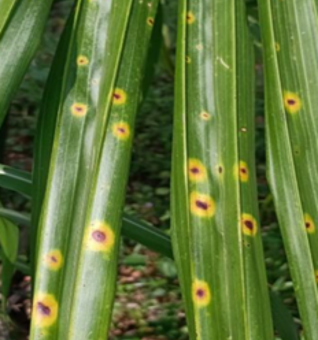
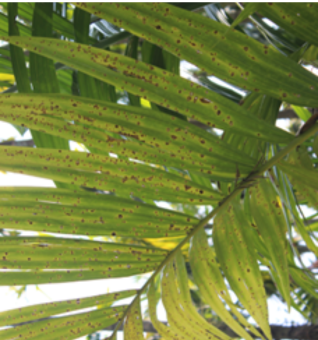
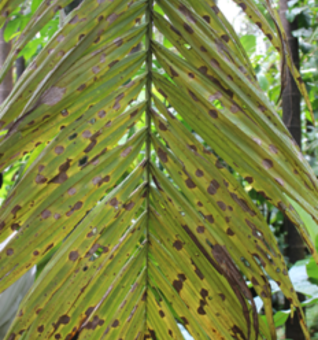
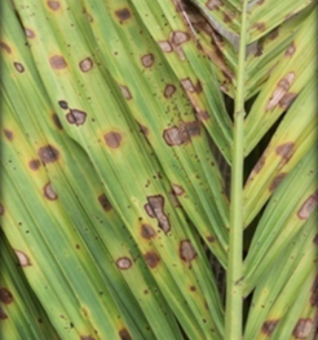
In severe cases, the leaf tissue dies, causing leaves to fall off early. Young seedlings are hit the hardest, showing slow growth and weak plants. If left unchecked, especially in poorly managed gardens, leaf spot can slash yields by up to 60% and leave palms struggling for seasons to come.
To protect arecanut from fruit rot and leaf spot, farmers need a mix of cultural, nutritional, and chemical measures.