UPI Payment





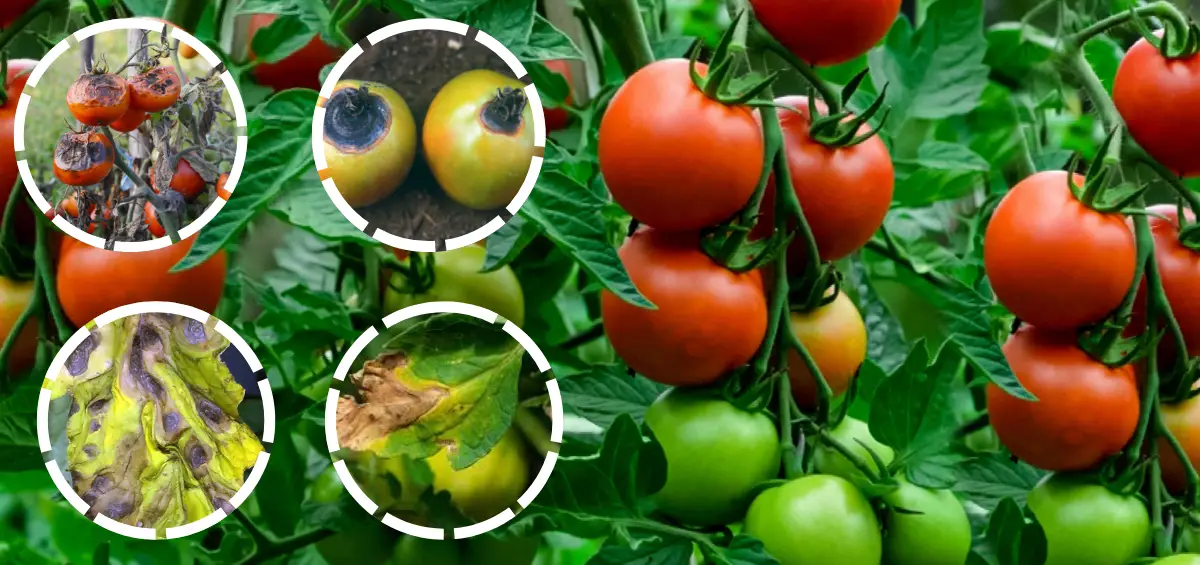
Tomato is one of the most widely grown vegetable crops, but its productivity is often threatened by serious foliar diseases. Among them, early blight and late blight are the most destructive and commonly confused disease among farmers. Although both cause severe plant damage and yield loss, they differ greatly in symptoms, causes, and management strategies. Understanding these differences is crucial for timely and effective control.
Early blight of tomato is a common disease caused by the fungus Alternaria solani. It mainly affects older plants but can occur at any growth stage under favourable conditions. Warm temperatures (24–30°C), high humidity, and frequent dew promote its spread. Nutrient-deficient, weak, or stressed plants are more susceptible. Infected nursery soil or plant debris harbour Alternaria solani, while overcrowded seedlings and poor air circulation increase humidity, promoting early blight infection. Continuous cultivation of tomato or potato increases risk, as the pathogen survives in infected debris and soil.
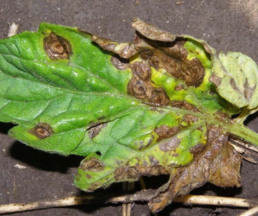
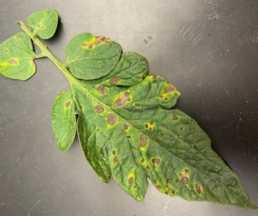
Early blight symptoms in tomato start on older, lower leaves. Small brown to black spots enlarge and form concentric rings, giving a target-like appearance. Surrounding tissue turns yellow, and infected leaves dry and fall off.
Infection spreads to stems, causing dark, sunken lesions at the lower stem. Fruits show dark, leathery spots near the calyx attachment. Severe infection causes defoliation, reduced photosynthesis, smaller fruits, poor quality, reduced yield. Loss of foliage may also expose fruits directly to sunlight, resulting in sunscald.
Management of early blight involves a combination of preventive and cultural practices.
Maintaining balanced plant nutrition, particularly adequate nitrogen and potassium, improves plant health and resistance. Remove and destroy infected plant debris from the field to reduce the spread of the pathogen.
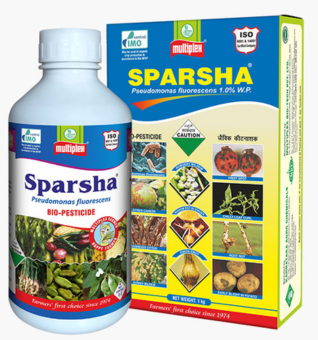
Preventive biological management can also be practiced by applying Multiplex Nisarga at 2–5 kg per acre and Multiplex Sparsha at 2–5 kg per acre during basal application.

Fungicides should be applied at the early stages of disease development.
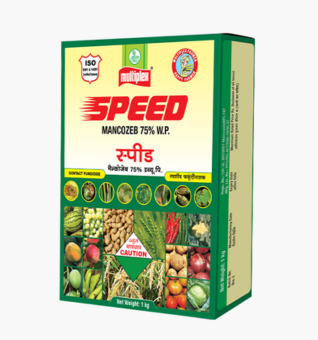
Products such as Multiplex Speed (mancozeb), Multiplex Ziddhi (Captan + Hexaconazole) at 2 g per litre of water, and Multiplex Duocare (Azoxystrobin + Tebuconazole) at 1.5 ml per litre are recommended.


Late blight is a highly destructive tomato disease caused by Phytophthora infestans. It can destroy entire fields quickly under favourable conditions. The disease develops rapidly in cool temperatures (15–22°C) with high humidity, cloudy weather, and continuous rainfall. Excess moisture, poor drainage, and continuous overhead irrigation in nursery conditions create ideal conditions for Phytophthora infestans, promoting rapid late blight infection. Poor drainage or waterlogging increases infection risk, as excess moisture favours pathogen growth and spread.
Late blight symptoms usually begin as water-soaked, pale green spots on the leaves, which quickly enlarge and turn dark brown. The lesions are irregular in shape and spread rapidly across the leaf surface. Under humid conditions, a white cottony growth appear underside of the infected leaves. As the disease progresses, dark brown to black lesions develop on the stems, which eventually lead to plant collapse. The fruits also become infected, showing large, greasy brown patches that later rot. Since the disease spreads rapidly through wind and rain, it can easily move from one field to another and cause severe crop damage.
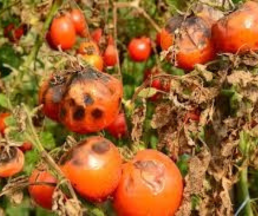
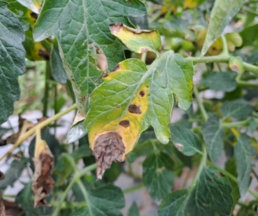
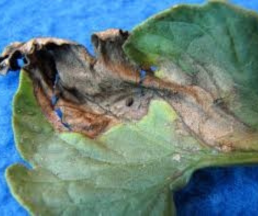
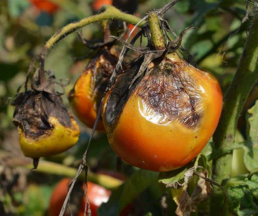
Effective management of late blight requires early preventive measures. Farmers should use resistant varieties to reduce the chances of initial infection. Proper field drainage should be maintained and overhead irrigation should be avoided to reduce leaf wetness. Infected plants should be removed immediately to prevent further spread of the pathogen.
Protective fungicides such as mancozeb or copper compounds can be applied to protect healthy plants.
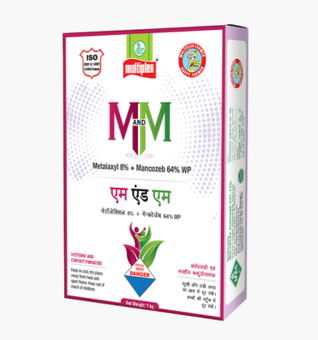
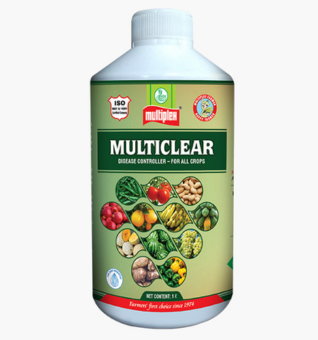
During disease outbreaks, systemic fungicides such as Multiplex M & M at 2 g per litre and Multiplex Multiclear at 3–4 ml per litre should be used. Following weather-based disease forecasting also helps farmers apply sprays at the correct time.
| Feature | Early Blight | Late Blight |
|---|---|---|
| Pathogen | Alternaria solani | Phytophthora infestans |
| Temperature | Warm (24–30°C) | Cool (15–22°C) |
| Leaf spots | Concentric rings | Irregular, water-soaked |
| Speed of spread | Slow to moderate | Very fast |
| Crop damage | Gradual yield loss | Sudden crop destruction |
Effective management of early and late blight is essential for protecting tomato crops and maintaining productivity. Multiplex crop protection solutions help control disease development at an early stage by protecting foliage, stems, and fruits from infection. Their balanced formulations support plant health while reducing disease spread in the field. By ensuring timely protection, Multiplex products help farmers maintain healthier crops, improve fruit quality, and achieve better yields even under disease-prone conditions.