UPI Payment





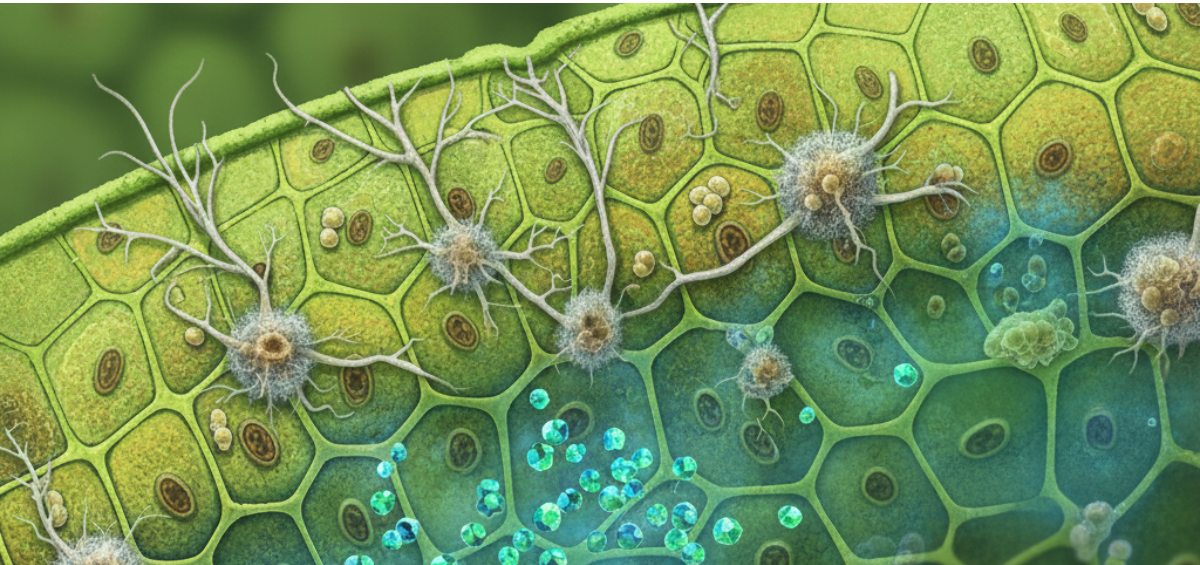
Plants possess a remarkable ability to defend themselves against pathogens through the production of specialised compounds known as phytoalexins. These low-molecular-weight antimicrobial compounds are synthesised by the plant in response to stress, like pathogen attacks or physical injury. Their primary function is to inhibit the growth and spread of invading microorganisms, thereby playing a crucial role in the plant's innate immune system.
Phytoalexins are chemically diverse compounds, including terpenoids, flavonoids, alkaloids, and stilbenes, produced within the plant at infection sites. Unlike phytoanticipins, which are pre-existing antimicrobial compounds, phytoalexins are synthesised only in response to a threat.
For instance, grapevines produce stilbene derivatives such as resveratrol when attacked by fungal pathogens, while rice generates sakuranetin to combat the rice blast fungus Pyricularia oryzae. These compounds are toxic to invading pathogens, acting as the plant's internal "chemical shield."
Through these responses, phytoalexins limit infection, slow pathogen growth, and strengthen the plant’s immunity.
External application of phytoalexin-inducers, such as Elicitors (substances that trigger the plant’s defence mechanisms), Phytohormones (Salicylic or Jasmonic acid), Bio-elicitors or Purified Phytoalexins can “prime” plants to activate defence mechanisms before severe infection.
Treatments with phytolexins enhances the synthesis of defence compounds, strengthen tissue barriers, and reduce pathogen establishment. The effectiveness of phytoalexin application relies on correct timing, dose, environmental conditions, and compatibility with specific crops and pathogens.
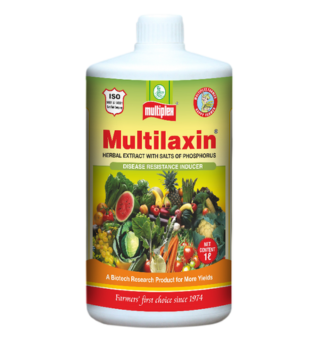
Multiplex Multilaxin is one of the products formulated to act as a chemical equivalent to naturally occurring plant compounds such as viniferin in grapes, rishtin in rice, and phaseolin in moong. These substances are produced by plants post-infection to counter disease invasions. Upon application, Multilaxin molecules penetrate fungal mycelium, restricting growth and eliminating spores. Additionally, it triggers biochemical reactions that synthesise phytoalexins, compounds that directly combat fungal pathogens.
The formulation of Multiplex Multilaxin comprises herbal extracts combined with various salts of phosphorus. These components work synergistically to stimulate the plant's defence responses. To apply, dissolve 3.0–4.0 ml of Multilaxin in 1 litre of water and spray on both surfaces of the leaves. The first spray should be initiated upon noticing fungal attack, with a second spray applied 10 days after the first.
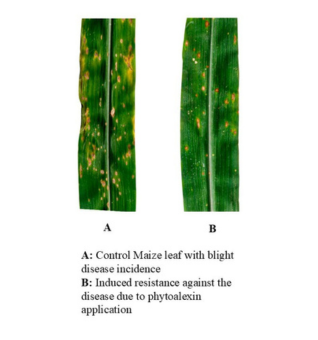
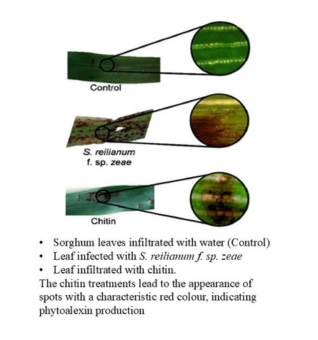
At the early stages of disease appearance, application of Multilaxin as soon as environmental conditions favour disease occurrence. It helps the plant to activate its internal defence system (stimulating phytoalexin production).
Alongside or shortly after, apply a protectant/contact fungicide that remains on leaf surfaces to inhibit spore germination and establishment.
This combination gives the plant an advantage. Multilaxin prepares the plant's defence mechanism whereas the fungicide stops pathogen invasion, jointly reducing disease pressure at the outset.
Note: Multiplex Multilaxin is not recommended to be used along with copper-based fungicides.
Phytoalexins are nature’s hidden warriors, crucial for defending plants against pathogens. With the external application of phytoalexin inducers like Multiplex Multilaxin, farmers can enhance crop immunity sustainably and effectively. By leveraging the plant’s innate defense system, Multilaxin not only protects crops from diseases but also promotes overall health and productivity, making it a vital component in modern integrated pest management
In essence, Multiplex Multilaxin transforms the plant into its own guardian, using nature-inspired science to ensure healthier, more resilient crops and a step toward sustainable agriculture.