UPI Payment





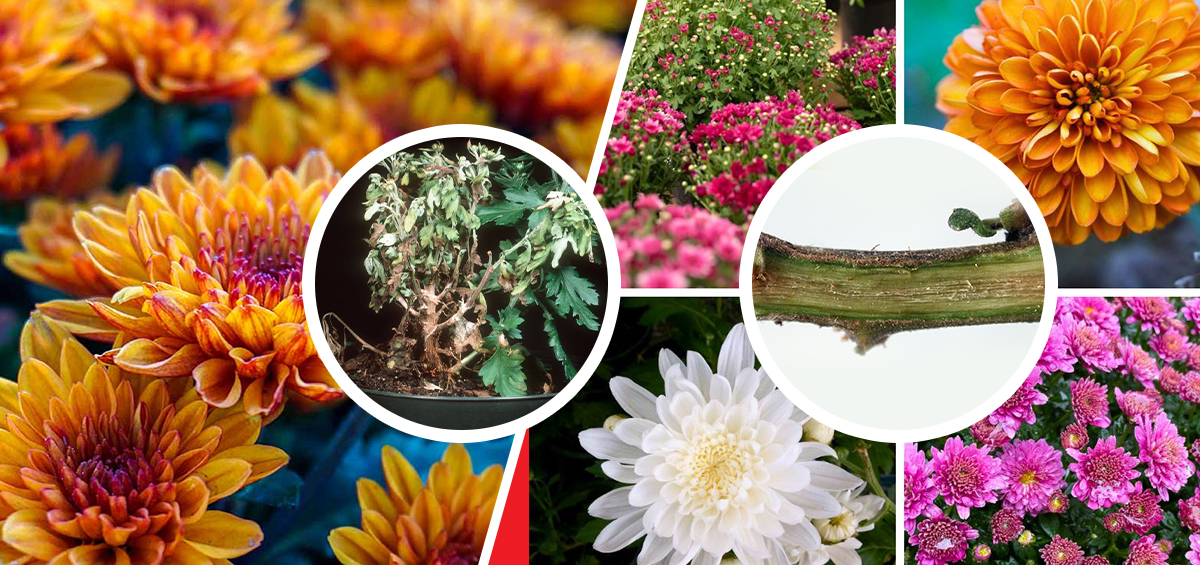
Chrysanthemums, often called “mums”, are more than just flowers—they are symbols of joy, celebration, and devotion. In India, they play a vital role in daily life and festivals, especially during September–October, when the vibrant blooms are in peak demand for Durga Puja, Dussehra, and Diwali. From temple offerings and garlands to decorative arrangements and cut flowers, chrysanthemums hold deep cultural and religious importance, making them one of the most cherished floriculture crops.
Botanically known as Chrysanthemum morifolium (family Asteraceae), this flower stands second only to roses in the global ornamental market. India has become a major producer, with output rising from 470,000 tonnes in 2021–22 to over 650,000 tonnes in 2023–24. Karnataka leads in production, followed by Tamil Nadu and Andhra Pradesh, reflecting the crop’s booming popularity.
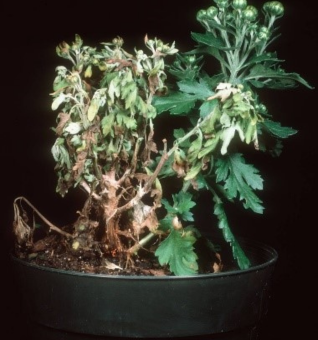
However, this beautiful crop faces a silent threat in the form of wilt diseases. The most destructive ones are Fusarium wilt and Stem rot. These pathogens can attack at any stage, from nursery seedlings to flowering plants, leading to sudden wilting, stem decay, and plant death.
What makes wilt especially challenging is its silent spread. It travels through infected cuttings, seeds, and soil, and is increasingly seen in commercial nurseries. Once established, it’s difficult to control, often leaving growers with wilted patches instead of vibrant blooms.
Fusarium wilt caused by Fusarium oxysporum f. sp. chrysanthemi and F. oxysporum f. sp. tracheiphilum is one of the common fungal wits observed in major chrysanthemum growing pockets of India. However, recent studies have also reported that Stem Rot, caused by Athelia rolfsii, also induces wilting symptoms, which have become a significant threat to chrysanthemum cultivation in India.
These fungi infect the plant and clog the xylem with spores and mycelia, blocking both water and nutrient flow. At the same time, their rapid mycelial growth rots the stem and root tissues, which ultimately leads to plant wilting.
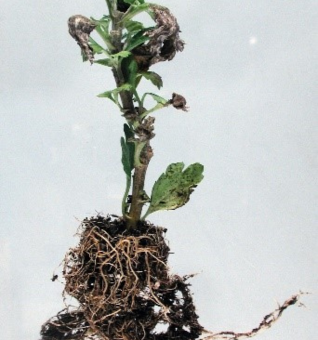
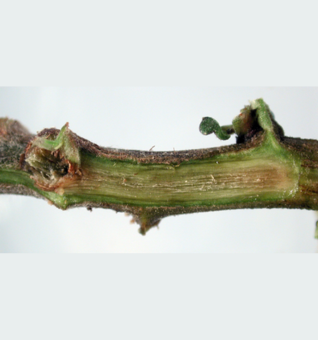
Usually affects one side of the plant. Lower leaves turn yellow or brown while the plant becomes stunted and flowers poorly. Cutting the stem reveals reddish-brown streaks in the vascular tissue, though the roots look healthy. In severe cases, white or pink mould may appear on stems.
This disease is severe in chrysanthemums grown in polyhouse conditions, where it starts at the base of the stem. A fluffy white growth with tiny mustard-seed-like sclerotia (turning brown later) develops. The stem softens, rots upward, and plants wilt rapidly. Young plants die quickly, often in patches.
Chrysanthemums are admired worldwide for their beauty and cultural value, but wilt disease can devastate these beautiful flower crops, so an Integrated approach combining biological, chemical, organic, and cultural methods ensures effective control of this disease.