UPI Payment





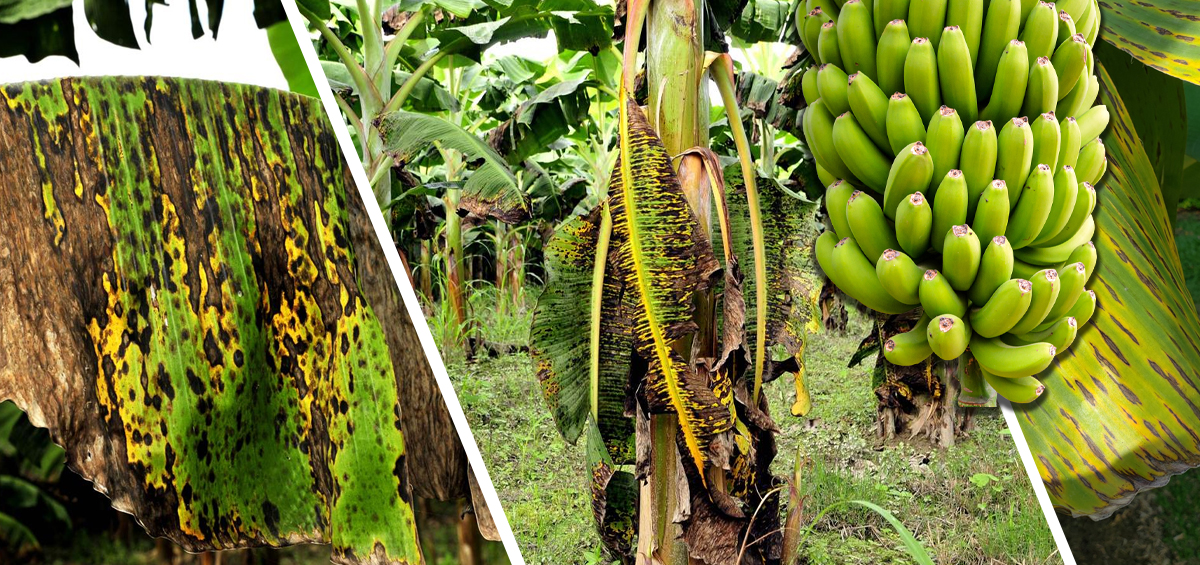
Banana is one of India’s most important fruits, grown across most states and essential to the livelihoods of lakhs of farmers. With high demand, rich nutrition, and year-round availability, it holds a vital place in the country’s horticulture sector.
Banana production in India faces major challenges from several diseases, with Sigatoka leaf spot being one of the most destructive. It reduces yields and forces farmers to adopt frequent fungicide sprays and intensive management, significantly increasing production costs and making the disease a persistent economic burden for growers.
Sigatoka is a destructive fungal leaf-spot disease that reduces banana leaf area, weakens plant health, and cuts yields. It threatens major banana-growing states like Kerala, Tamil Nadu, Karnataka, Maharashtra, Gujarat, West Bengal, and Tripura. The disease often intensifies during November–December due to favourable humid and cool conditions.
The disease was first identified in the Sigatoka Valley of Fiji, hence the name.
Sigatoka is a fungal leaf spot disease that affects the foliage of banana plants. It is caused primarily by two related pathogens:
Both diseases affect banana leaves and reduce photosynthesis. As banana fruits depend heavily on leaf health for proper development, sigatoka-infested plants produce smaller, lower-quality bunches, or in severe cases, no marketable fruit at all.
Banana is cultivated extensively in Tamil Nadu, Maharashtra, Gujarat, Andhra Pradesh, Karnataka, Kerala, Assam, Bihar, West Bengal, and the North-East. Many of these regions have warm, humid, and rainy conditions, which act as an ideal environment for Sigatoka fungi to thrive. Yellow Sigatoka is more common in India, while Black Sigatoka appears in some high-humidity areas.
States prone to high Sigatoka incidence include:
The disease pressure increases particularly during the monsoon months (June–September) when humidity, temperature, and rainfall remain consistently high.
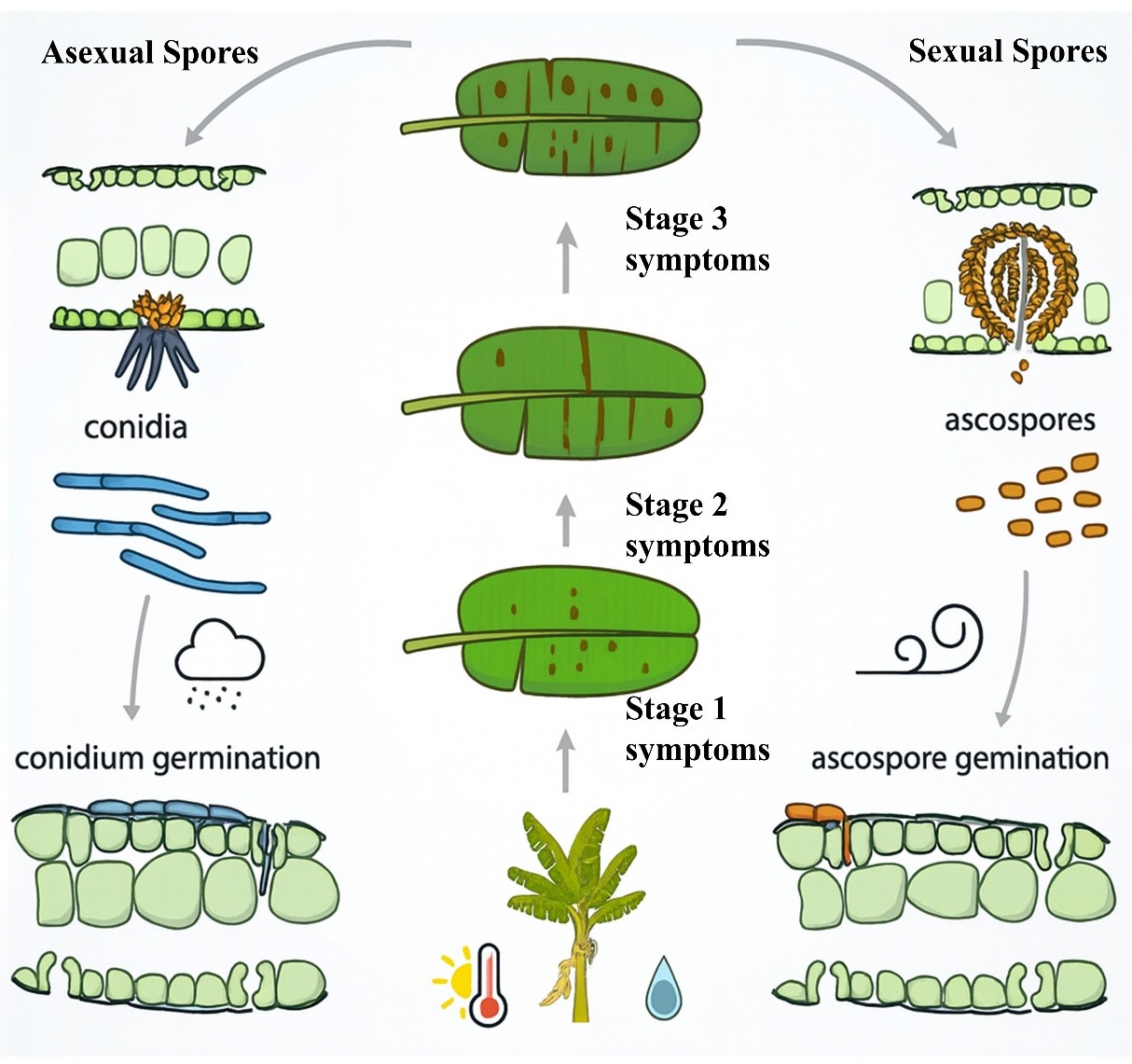
The lifecycle of Sigatoka is complex and well-adapted to tropical climates:
Spore Types:
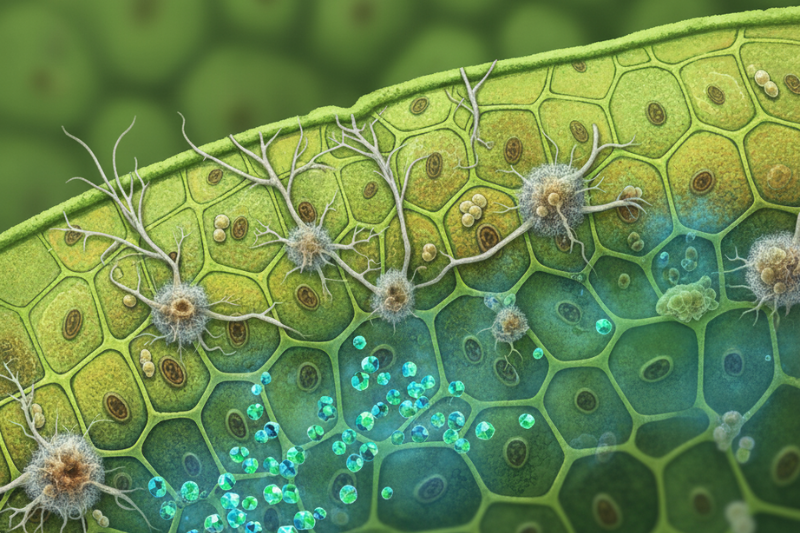
Infection: The fungus enters through stomata on the leaf underside. Under humid conditions, conidia and ascospores germinate quickly. Once inside, the fungus grows, producing hyphae that colonise the leaf.
Reproduction & Reinfection: Sigatoka is polycyclic in nature; infected leaves release spores repeatedly. Dead or drying leaves left in the field further act as long-lasting spore reservoirs as pseudothecia develop.
Early detection of Sigatoka is crucial for effective control. The symptoms progress in distinct stages:
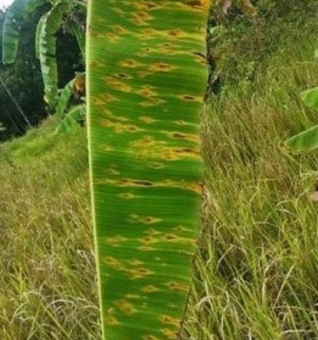
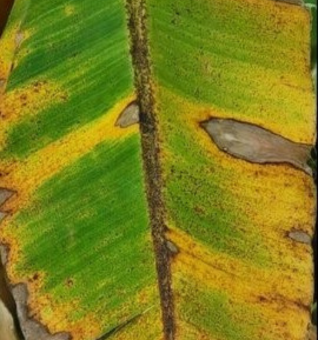
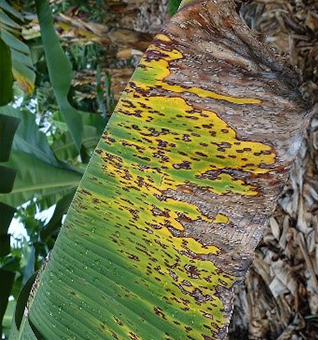
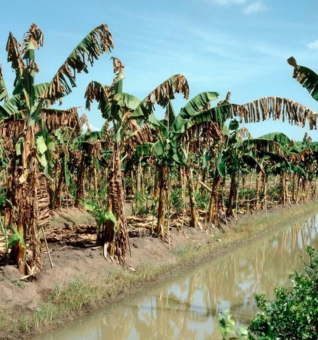
| Feature | Black Sigatoka | Yellow Sigatoka |
|---|---|---|
| Colour of streaks/spots | Dark brown to black streaks, rapidly expanding | Pale yellow to light brown streaks |
| Progression rate | Fast → matures quickly into necrotic spots | Slower disease development |
| Favorable climate | Warm (28–30°C), humid, high rainfall, cloudy weather | Cooler (20–25°C), humid but less warm |
| Altitude preference | Lowlands and mid-altitudes | Higher altitudes and cooler regions |
| Yield impact | Very high (up to 50–90% loss if unmanaged) | Moderate (20–40% loss) |
| Leaf symptom pattern | Irregular black streaks → elongated necrotic blotches | Small yellow spots → slow enlargement |
| Resistance development | Pathogen develops fungicide resistance quickly | Less resistance pressure |
To keep Sigatoka in check, Indian banana growers should adopt an integrated strategy:
Spore Types: