UPI Payment






Agriculture is not only about fertilizer and water. Healthy roots and natural plant defence are equally important for good production. Farmers are increasingly looking for biological solutions for healthier crops. One useful microorganism is Pseudomonas fluorescens, a beneficial bacterium widely studied for plant growth promotion and biological crop protection.
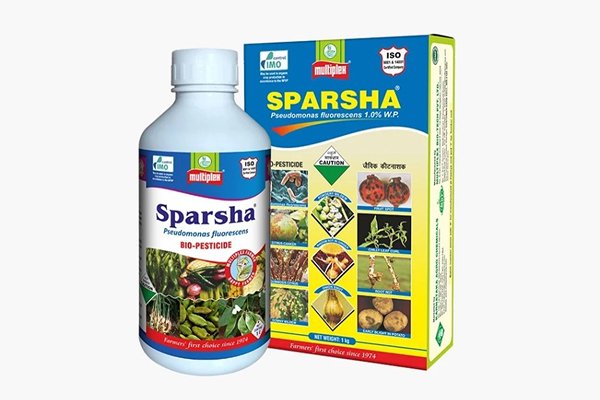
Pseudomonas fluorescens naturally lives around plant roots, in an area called the rhizosphere. When beneficial bacteria establish themselves around the roots, they can compete with harmful microorganisms and help the plant obtain nutrients. Multiplex Sparsha is associated with Pseudomonas fluorescens, bringing this type of microbial technology closer to practical agriculture.
Pseudomonas fluorescens supports plant growth in several ways. It can produce indole-3-acetic acid (IAA), which supports root development. Stronger roots can help plants explore more soil for water and nutrients.
The bacterium can also make phosphorus more available by solubilising forms that are otherwise difficult for roots to absorb. It also produces siderophores that capture iron from the soil. By competing for iron, beneficial Pseudomonas can also make it more difficult for some harmful pathogens to establish.
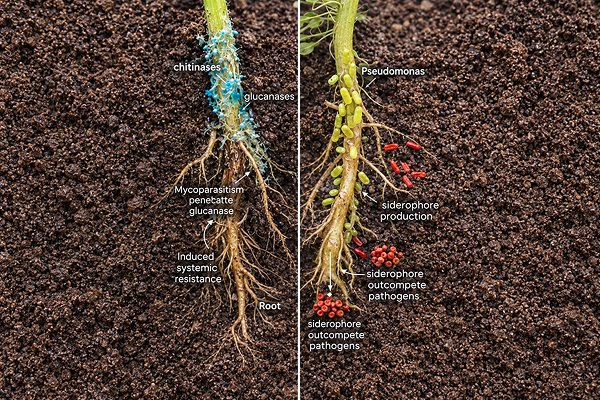
Pseudomonas fluorescens does not depend on only one method to protect plants. It can produce antimicrobial substances, enzymes and other compounds that interfere with harmful microorganisms. Compounds such as DAPG, phenazines, pyrrolnitrin and hydrogen cyanide have been associated with suppression of different plant pathogens.
It can also produce enzymes such as chitinase, glucanase and protease that affect harmful organisms, particularly fungi. At the same time, rapid colonisation of the root zone allows beneficial bacteria to occupy space and use nutrients before harmful organisms can establish themselves.
This combination makes Pseudomonas useful in Integrated Pest Management (IPM).
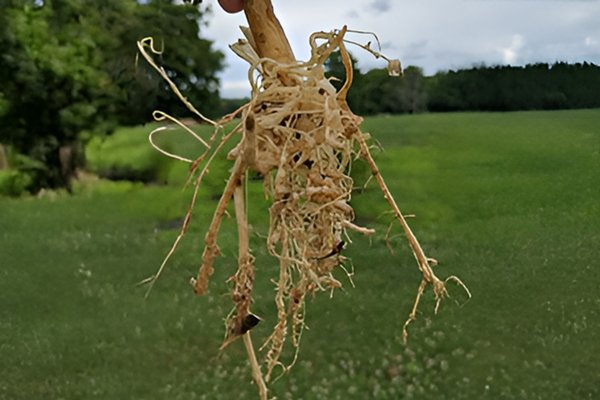
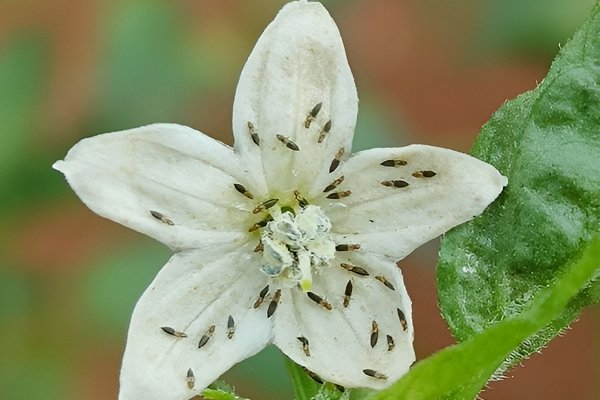
Its role is not limited to fungal diseases. Pseudomonas-induced systemic resistance (ISR) can improve plant defence against biological stresses, including nematodes and insect pests.
Nematodes such as root-knot nematodes attack plant roots and reduce the plant’s ability to absorb water and nutrients. Pseudomonas can contribute to nematode management through plant defence activation and microbial interactions in the root zone. Therefore, it can be an important component of an integrated nematode-management programme.
Similarly, beneficial Pseudomonas can stimulate natural plant defence against insect pests. This is relevant to pests such as thrips, including black thrips, where maintaining plant vigour and activating natural defence responses can contribute to integrated pest management. However, control depends on the particular strain, crop, pest pressure and field conditions. Pseudomonas should therefore be considered one component of IPM rather than a guaranteed replacement for every insecticide.
Imagine that a plant is trained to respond faster when danger arrives. This is broadly how induced systemic resistance (ISR) works. Beneficial bacteria around the roots can “prime” the plant’s natural defence system. When the plant later faces a pathogen or pest attack, its response can become faster and stronger.
This can strengthen cell walls and activate defence-related genes. Because the response is produced by the plant itself, ISR can support protection against several biological stresses.
Pseudomonas fluorescens has been studied in many crops, including rice, wheat, tomato, chilli, black pepper, groundnut, chickpea, soybean, potato, cucumber, cotton, onion and sugarcane.
Research has reported improved germination, growth, nutrient uptake and yield, along with disease suppression.
At Multiplex Group of Companies, biological technologies are part of the goal of supporting sustainable agriculture. Multiplex Sparsha, associated with Pseudomonas fluorescens, represents the practical application of research on beneficial plant-associated microorganisms.
Their strength is their multiple modes of action. Instead of focusing on only one problem, beneficial Pseudomonas can support roots, nutrient availability, plant growth, natural defence and biological suppression of harmful organisms.
Pseudomonas fluorescens may be microscopic, but its role in agriculture can be significant. From helping roots grow and improving nutrient availability to supporting plant defence against diseases, nematodes and insect pests, this beneficial bacterium offers several possibilities for sustainable crop production.
The future of agriculture will depend on combining good agronomic practices, balanced nutrition, biological solutions and responsible crop protection. Beneficial microorganisms such as Pseudomonas fluorescens can be an important part of this approach, helping farmers work with nature to build healthier roots, stronger plants and more sustainable farms.