UPI Payment





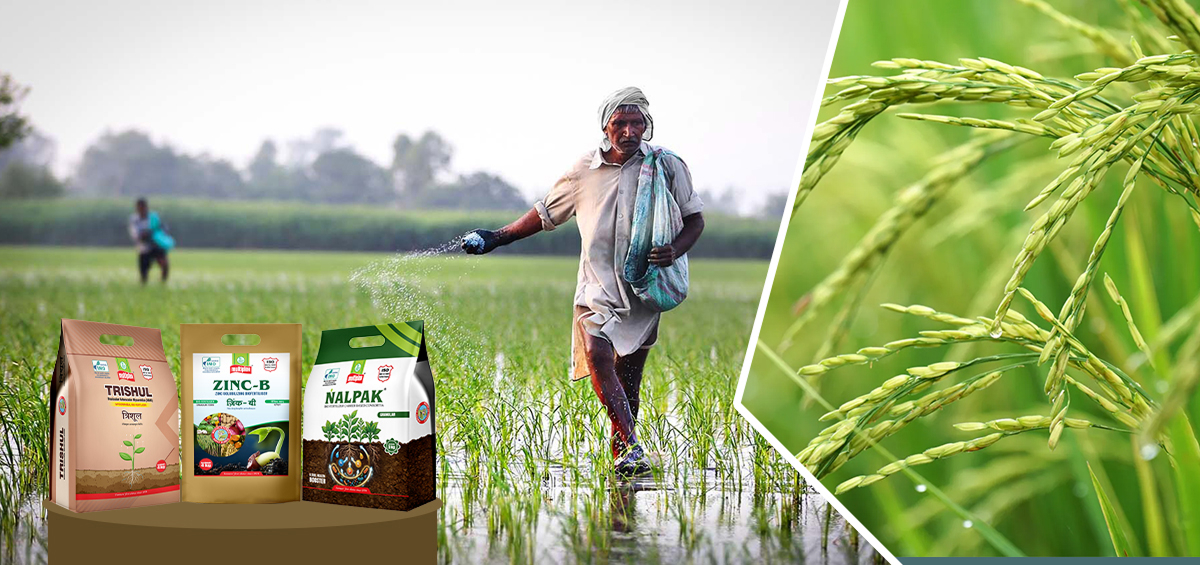
India has surpassed China as the largest rice-producing country in the world. In the 2024-25 season, our total rice production breached the 150 million tonne mark, signifying the fact that India has achieved what it sought to achieve during the Green Revolution, i.e., becoming a food-surplus nation.
This transformation came with a price. A price of diminishing soil fertility and an alarmingly increasing dependence on chemical fertilizers. In 2024–25, India used a whopping total of 707 lakh metric tonnes of chemical fertilizers. Paddy, being the main kharif crop grown across India, is responsible for 33 to 35 percent of this usage, i.e., a total of 269.51 lakh metric tonnes.
The adverse effects of overdependence on chemical fertilizers have already begun to appear. The major rice grown areas of India, be it the Punjab–Haryana, Uttar Pradesh–Bihar, eastern alluvial belts of West Bengal, Odisha–Chhattisgarh, Andhra–Telangana Kaveri river belts of Karnataka - Tamil Nadu and Tungabadhra river belt have shown a significant decline in fertility.
A study conducted by Punjab Agricultural University in the Ludhiana - one of the highest fertilizer-consuming regions in India - found that nitrogen and phosphorus fertilizers had little or no significant effect on increasing paddy yield. Punjab's Soil and Water Conservation Department surveys in Sangrur, Barnala, Patiala, SAS Nagar, and Fatehgarh Sahib also yielded the same results, thus signifying the fact that the overuse of chemical fertilizers is limiting soil fertility.
If chemical fertilizers are deteriorating soil health, can reducing or stopping their use in paddy solve all the problems? Actually, no. Drastically reducing chemical fertilizers or completely stopping their application can significantly reduce the harvest of India's staple food. A 6-tonne paddy crop extracts 200 kg of NPK nutrients. If chemical fertilizers are suddenly withdrawn, the nutrient demand of the crop cannot be met, resulting in lower yields.
Rather than drastically reducing chemical fertilizers, farmers should adopt an integrated approach to nutrient management. The combined use of organic manures and biofertilizers along with recommended doses of chemical fertilizers has been shown to produce slightly higher yields than chemical fertilizers alone.
Bio fertilizers by definition are living microorganisms that improve plant growth by naturally supplying or making nutrients more available to crops, thereby reducing the dependence on chemical fertilizers. Below mentioned are some of the Bio Fertilizers available in the market which a farmer can integrate as a overall nutrient plan in his paddy crop.
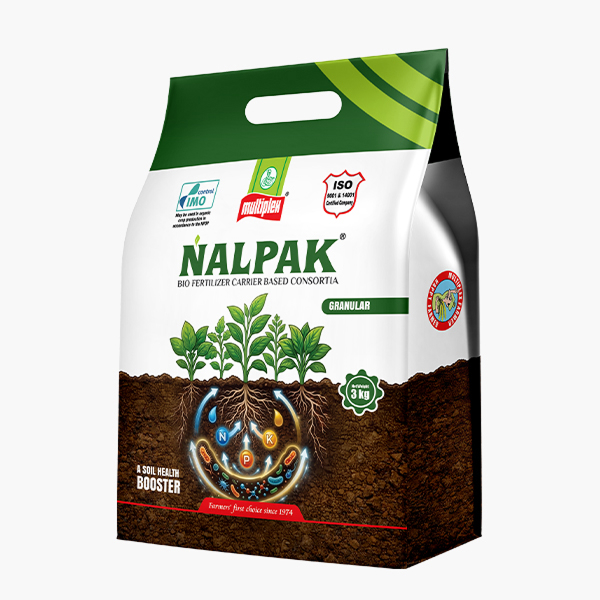
Paddy has a low nutrient use efficiency, with nearly 60 to70% of applied nitrogen lost through volatilization and leaching, 70 to 85% of phosphorus becoming fixed in the soil, and 40–60% of potassium remaining unavailable to the crop during the season. To increase the nutrient efficiency farmers can make use of Multiplex Nalpak.
Multiplex NalPaK is a consortium biofertilizer which containsAzotobacter chroococcum, Bacillus megaterium, and Frateuria aurantia, which fix atmospheric nitrogen, solubilize phosphorus, and mobilize soil-bound potassium. These microorganisms ensure a continuous supply of nutrients, promoting stronger root development, better tillering, improved nutrient uptake, healthier vegetative growth, better panicle formation, and enhanced grain filling. Multiplex NalPaK contributes to 20 to 40% increase in the yield by supporting sustainable and profitable paddy cultivation.
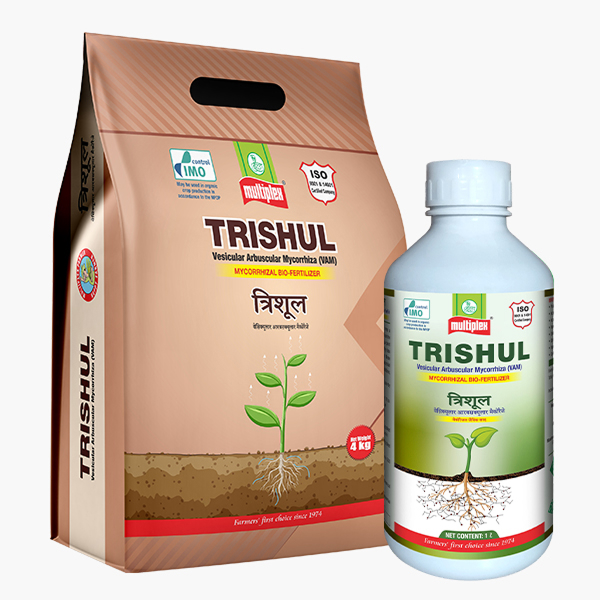
Multiplex Trishul contains Arbuscular Mycorrhizal Fungi (VAM), which extend beyond the root zone to improve the uptake nutrients. This promotes stronger root growth, better tillering, improved plant vigour, efficient grain filling, and higher productivity while enhancing nutrient use efficiency and soil biological activity.
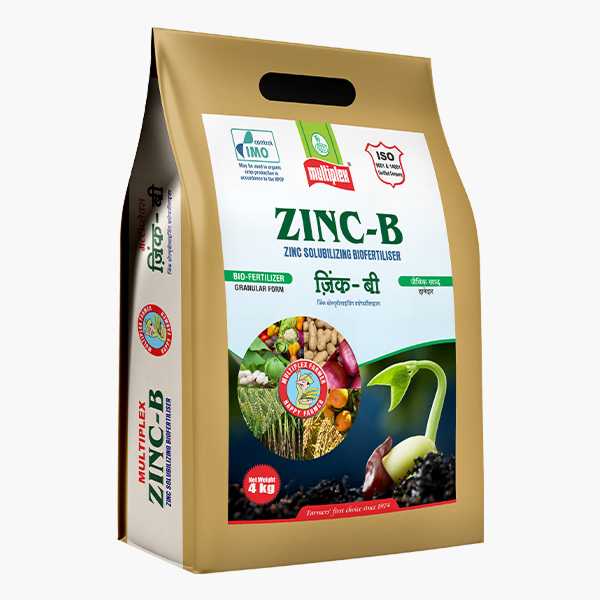
Zinc deficiency is one of the most widespread micronutrient constraints in Indian paddy, affecting 63% of agricultural soils. As the second most yield-limiting nutrient after nitrogen, zinc deficiency can reduce tillering, root growth, chlorophyll synthesis, and grain development. In North India, zinc deficiency in rice is commonly known as Khaira disease. If left unmanaged, it can cause crop yield losses of up to 80%.Multiplex Zinc-B contains the zinc-solubilizing bacteriasPseudomonas striata and Bacillus aryabhattai, which convert insoluble soil zinc into plant-available forms. This improves zinc uptake, resulting in up to a 17% increase in crop yield.
As Indian agriculture moves towards sustainable farming, integrating biofertilizers with balanced nutrient management has become increasingly important for paddy cultivation. Biofertilizers such as Multiplex NalPaK, Multiplex Trishul, and Multiplex Zinc-B improve nutrient use efficiency, enhance beneficial microbial activity, reduce chemical fertilizer requirements by 20–25%, and increase nutrient availability to the crop. They also help restore soil fertility, improve root growth, minimize nutrient losses, and support long-term soil health. This integrated approach contributes to higher productivity, improved grain quality, and sustainable rice yields while reducing the environmental impact of conventional fertilizer use.