UPI Payment





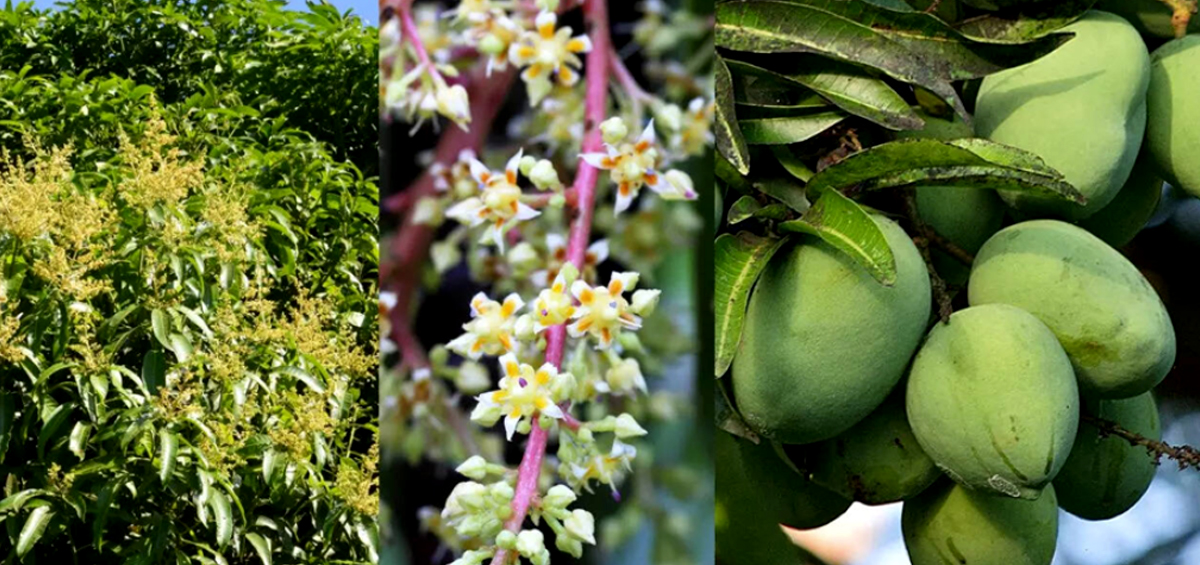
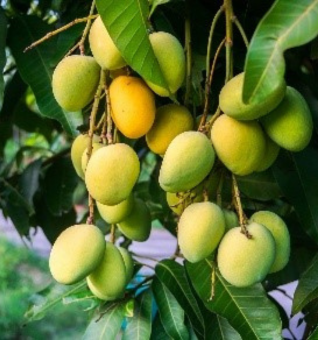
Mango (Mangifera indica) is one of the most important tropical fruit in India. Mango flowering is a critical stage as it directly affects the yield of the fruit. Flowering in mango is highly dependent on the variety and environmental conditions. Thus, proper management strategies taken during the mango flowering stage can improve the potential number of fruit production.
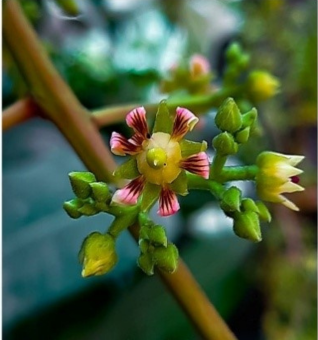
Mango trees have two types of flowers - male and bisexual on the same flower cluster. The inflorescence usually grows at the end of the branches (terminal). Each cluster, called a panicle, may have about 1000 to 6000 flowers, depending on the variety. Most mango flowers open at night or early in the morning, and the flowering period is short, usually lasting 2 to 3 weeks.
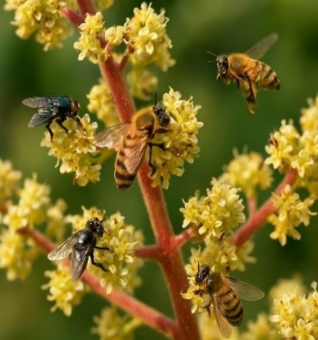
While mango trees self-pollinate, various pollinators help in boosting yields. Honeybees being primary pollinators, flies, ants, and even beetles visit flowers for nectar, inadvertently transferring pollen and ensuring better fruit production through enhanced pollination.
Flowering usually occurs from December to February, with fruit developing between January and May. Cool temperatures (15–20°C daytime, 10–15°C nighttime) and bright sunshine are essential for flower initiation, ensuring proper fruit set and development.
The sex ratio in different cultivars is greatly influenced by the genotype and environment in which they grow. Normally, it ranges from 0.20 to 0.95 %. Even the same cultivars behave differently in different agroclimatic regions.
| Varieties | Number of fruitlets / panicle | Fruit set percentage (%) | Fruitlet drop percentage (%) | Fruit retention at maturity (%) | Number of fruits / panicle at harvest |
|---|---|---|---|---|---|
| Banganpalli | 4.63 | 1.12 | 65.83 | 34.17 | 1.50 |
| Dashehari-35 | 5.25 | 3.28 | 50.00 | 57.50 | 3.00 |
| Kesar | 5.13 | 1.72 | 51.36 | 46.14 | 2.50 |
| Totapuri | 5.50 | 2.17 | 54.37 | 43.13 | 2.50 |
| Suvarnarekha | 4.13 | 1.15 | 62.92 | 44.58 | 2.00 |
| Himayath | 4.75 | 0.98 | 62.85 | 37.15 | 1.75 |
| Chinnarasam | 4.75 | 1.77 | 62.66 | 37.34 | 1.75 |
| Dashehari | 4.88 | 3.00 | 54.41 | 48.09 | 2.25 |
Fruit drop in mango is a serious problem causing heavy yield losses. About 99 % of the crop is lost due to drop of bisexual flowers and immature fruits. The intensity is maximum within 15 days after pollination/anthesis, in which about 60-70 % bisexual flowers and immature fruit drop within a short period of time. In general, only 0.01 % of the pollinated perfect flowers set fruit.

Low temperatures around 15-18°C and 6-8 months old, matured shoots have a strong possibility for floral growth initiation.
Consistent decline in gibberellins with increase in cytokinins and abscisic acid in combination with sufficient build-up of carbohydrates in the buds approaching bud burst stage ensures floral inductions in mango.