UPI Payment





Arecanut (betel nut) is an important plantation crop grown mainly in Karnataka, Kerala, and Tamil Nadu, and also in parts of Andhra Pradesh, Assam, Maharashtra, Meghalaya, and West Bengal. The yield of arecanut depends greatly on healthy flowering and good nut setting. However, farmers often face problems due to diseases and disorders that reduce production.
Among arecanut diseases, fruit rot, yellow leaf, basal stem rot, and inflorescence die-back are economically important, directly affecting crop health, fruit set, and marketable yield. Healthy flowering ensures good nut set and higher yields, while inflorescence die-back, increasingly reported by farmers, causes severe yield losses if not managed in a timely.
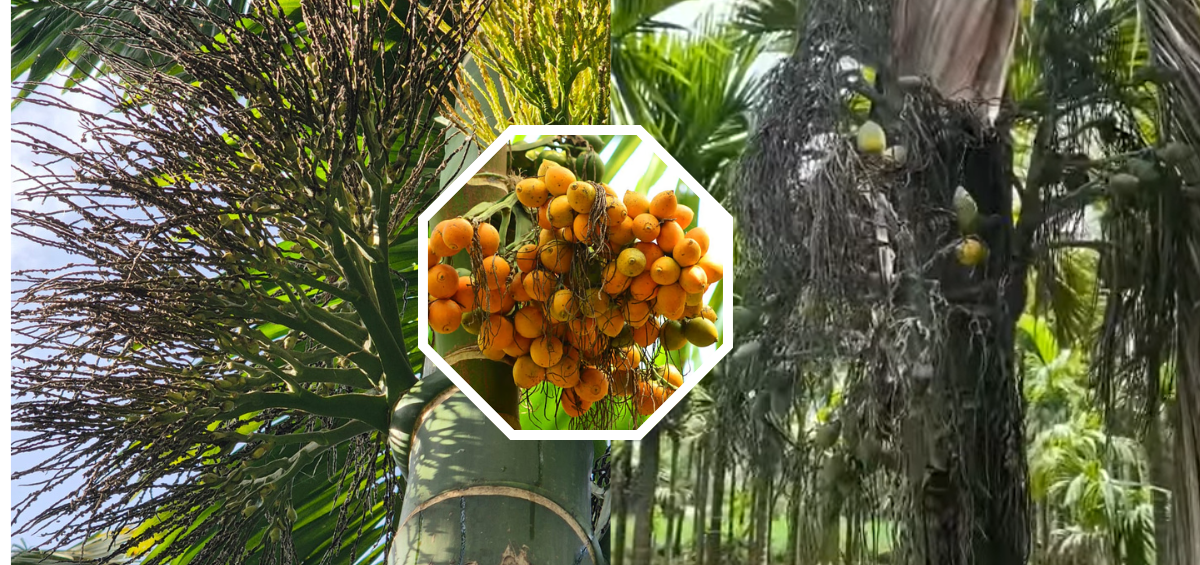
Inflorescence die-back is a disease in arecanut where the flower bunch dries prematurely, causing small flowers and young nuts (buttons) to shed before proper development, resulting in poor nut formation and reduced farmer income.
Colletotrichum gloeosporioides is the fungus commonly associated with affected flower bunches, and it can survive for several months on old infected plant debris in the garden, later spreading to healthy palms.
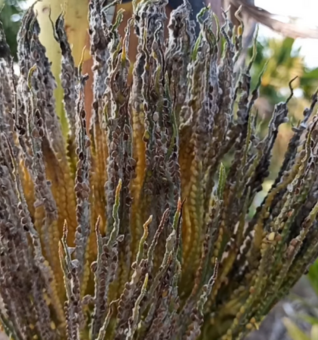
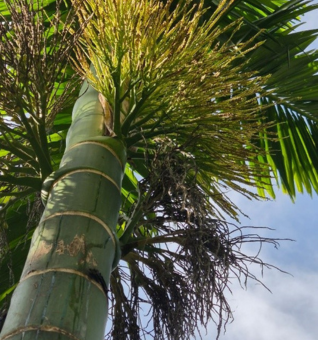
Inflorescence die-back of arecanut arises from nutrient and moisture stress, especially boron and potassium deficiency, and adverse flowering weather, followed by Colletotrichum infection spreading via wind and rain, causing inflorescence drying and blackening.
High temperature(35-400C), Humidity 40–60%, moisture stress, boron and potassium deficiency, adverse flowering weather, and warm humid conditions favour inflorescence die-back in arecanut.
Drying of the flower bunch from the tip marks the onset of the problem, disrupting normal flower activity and causing both male and female flowers to wilt and drop prematurely. This results in poor pollination and low fruit set, placing the palm under continuous stress and eventually causing significant yield reduction.
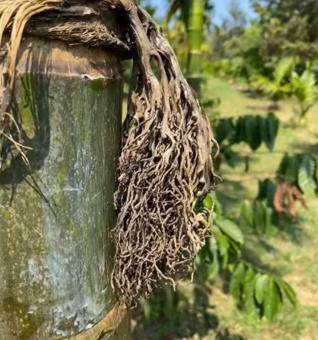
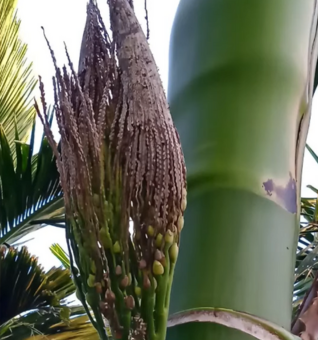
Inflorescence die-back does not have just one cause. It happens due to a combination of stresses:
Boron deficiency, essential for flower and nut development, weakens flowers causing easy drying, while zinc and potassium deficiencies worsen the disease, reducing flowering, fruit set, and overall arecanut yield.
Insufficient water during flowering weakens the palm and limits nutrient uptake, while excess water or poor drainage harms the roots and negatively affects flower health.
High temperatures, dry winds, and low humidity during summer cause rapid moisture loss, leading to drying of flower bunches.
Using too much nitrogen without enough potassium and micronutrients leads to more leaves but weaker flowers.
When flower bunches are already under abiotic stress, fungi such as Colletotrichum and Phytophthora can infect them, accelerating and intensifying the drying process.
Healthy flowering is the foundation for good nut set and high yield in arecanut. Many problems like flower drying, button shedding, and poor yield can be avoided by following measures.
For healthy flowering and better nut formation in arecanut, apply balanced NPK fertilizers based on soil tests and ensure boron, zinc, and potassium are sufficient. Use borax and zinc sulphate sprays to prevent flower drying and improve fruit set, while potash strengthens flower stalks and reduces flower drop.
Provide regular irrigation during flowering, avoid sudden dry–wet cycles, and ensure proper drainage to keep palms healthy and prevent root damage.
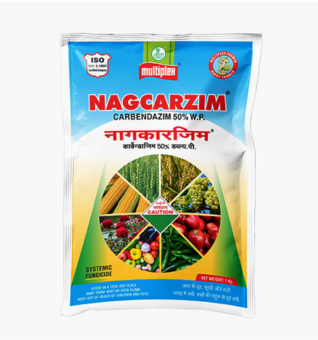
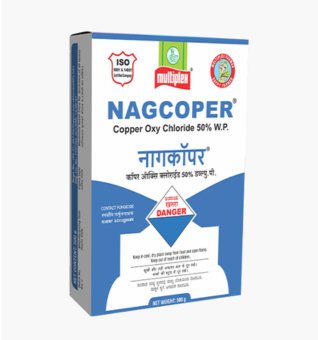
Remove and destroy dried or infected flower bunches, and at early signs of drying, As preventive measures, Spray 1% Bordeaux mixture or Multiplex Nagcoper at 3g/lit.
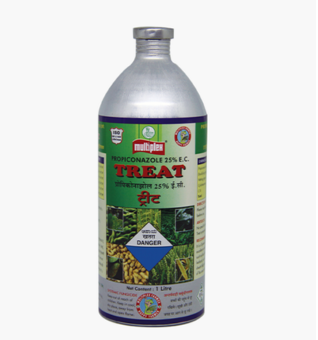
If the infection is severe, spray Multiplex Nagcarzim at 1.5g/lit or Multiplex Treat at 1ml/lit or Multiplex Nagzol at 2ml/lit or Multiplex Duo Care at 1ml/lt to control fungal infections and protect flower health.
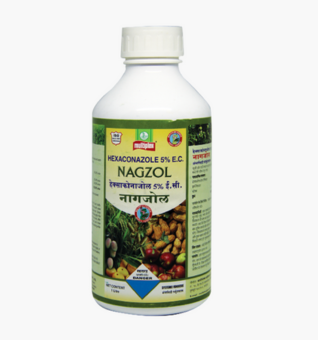
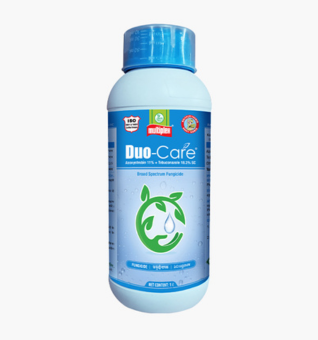
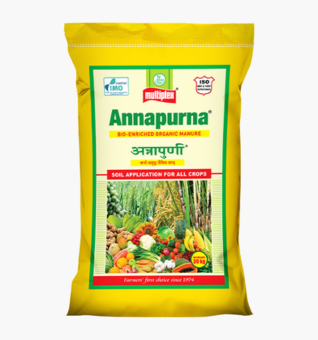
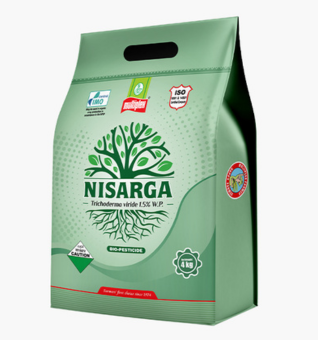
Regular application of Multiplex Nisarga 2-5Kg/Acre along with Multiplex Annapurna at 500 g to 2 kg per plant & depending on plant age, helps improve soil fertility, conserve moisture, strengthen roots, and protect against soil-borne pests and diseases.
Regular soil testing, proper orchard sanitation, close monitoring of palms during flowering, and timely preventive measures are essential for effective crop management.
Inflorescence die-back in arecanut mainly affects flowers and young developing fruits, causing 10–20% loss in mild cases (partial spikelet drying with few young fruits affected), 30–50% loss in moderate cases (drying of rachilla cause poor fruit set, young fruit drop), 70–100% loss in severe cases (complete inflorescence drying with no young fruit formation), while mature fruits are generally not affected.
Inflorescence die-back in arecanut is manageable; being mainly physiological, timely nutrient correction, proper irrigation, good agronomic practices, and early prevention measures reduce incidence, protect flowering, ensure yield stability, and sustain plantations.