UPI Payment





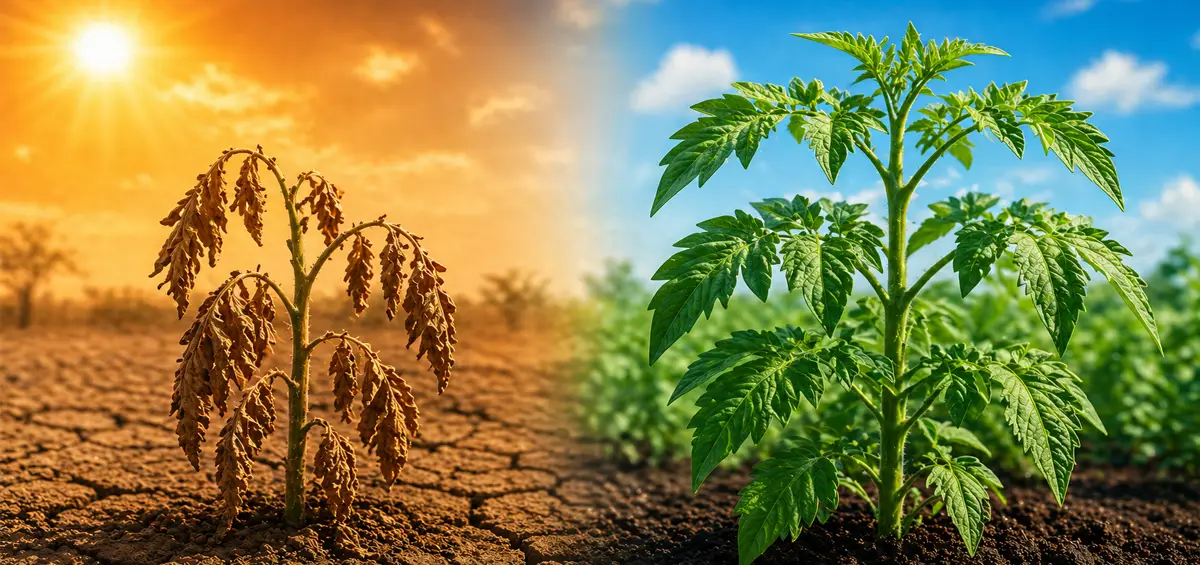
“Heat stress” is what happens to plants when they are exposed to enormous amounts of sunlight and heat for too long period of time. It often refers to a period in which plants are subjected to high temperatures for long enough to permanently alter their ability to function or grow normally.
The ideal range for most crops is between 20 and 30°C. Temperatures outside this range, whether in the air or the soil, during the day or the night, are harmful to plants. Heat stress is the cumulative effect of the heat’s severity, the time plant is exposed to the heat, and the rate at which the temperature is rising.
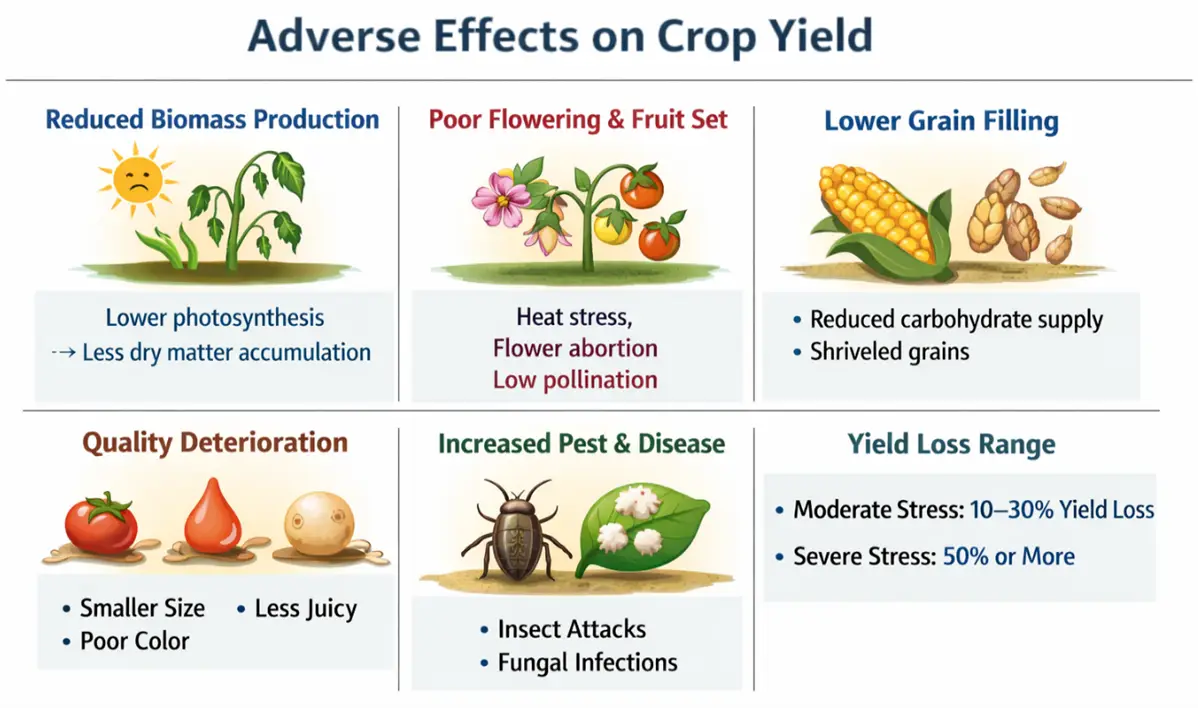
Plants experience summer stress creating multiple physiological and biochemical disturbances in plants that directly reduce crop productivity.
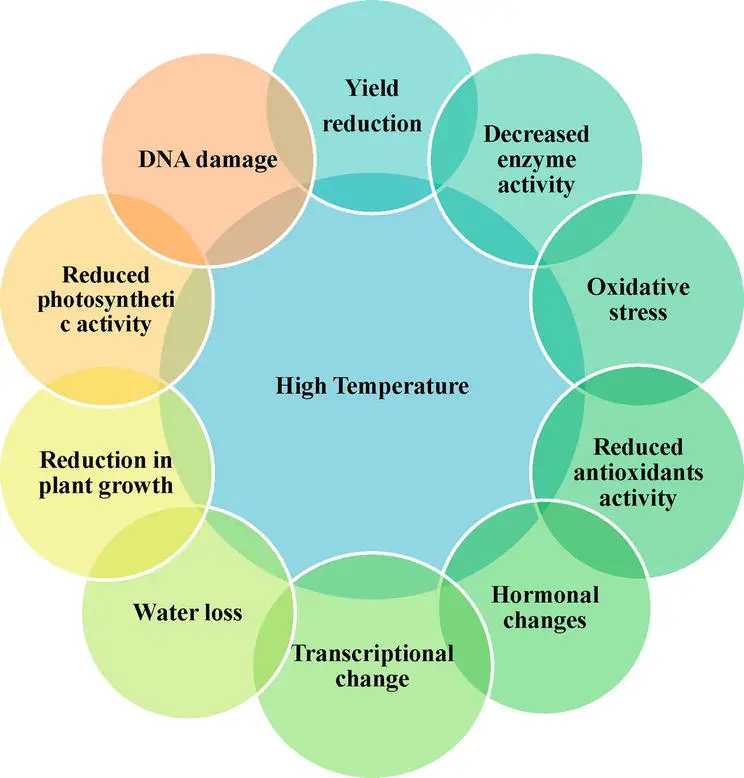
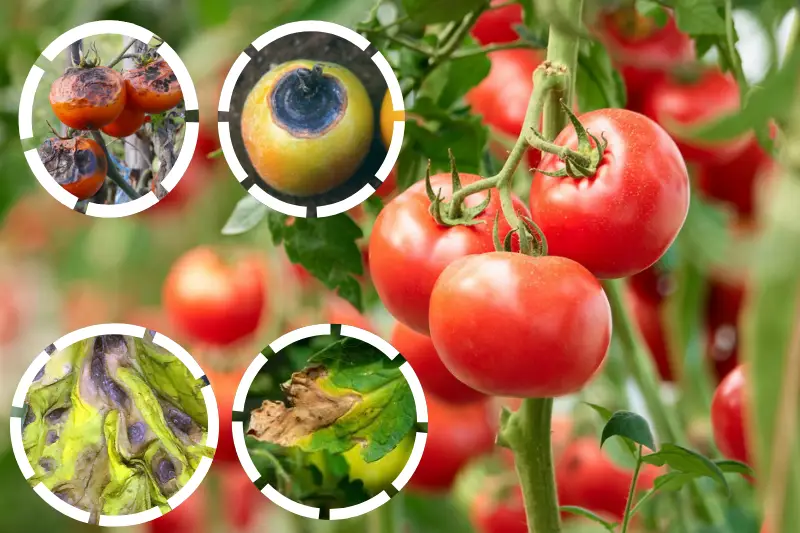
Heat stress in plants may resemble to those caused by certain crop diseases or pests. Moreover, heat and drought stress can lead to plant diseases as well. When considered together, the following symptoms of heat stress will allow for a more precise diagnosis.
Leaf Rolling and Cupping: Plants roll or cup their leaves to reduce water loss. This decreases leaf surface area and causes stomata to close, helping conserve moisture.
Wilting: Occurs when water loss exceeds the plant’s ability to absorb moisture, leading to reduced internal water pressure.
Dried Leaf Margins: Some crops dry the outer edges of leaves as a survival response.
Ozone Damage: High temperatures combined with poor air quality can lead to ozone injury. Ozone enters through stomata and burns plant tissues, causing visible damage.
Flower & Fruit Drop, Fruit cracking: Heat stress can prevent flowering or cause buds, flowers, and fruits to drop. Also, high temperature stress can lead to fruit cracking.
Bolting: Common in cool season crops such as crucifers. High temperatures trigger premature flowering, which can reduce yield or make crops unusable.
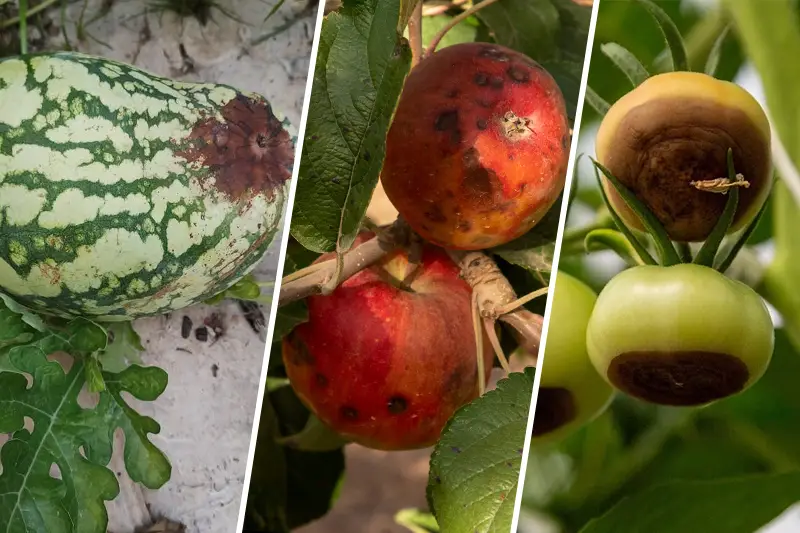
Sunscald: Fruits exposed directly to intense sunlight may develop discoloration, watery patches, blisters, sunken areas, or dry, scorched surfaces.
Blossom-End Rot: High heat and solar radiation increase photosynthesis and transpiration, diverting water and calcium from fruits to leaves.
Some of the measures are geared towards protecting plants from experiencing heat stress, while others aim to help them adjust to the heat. One such best measure is use of;
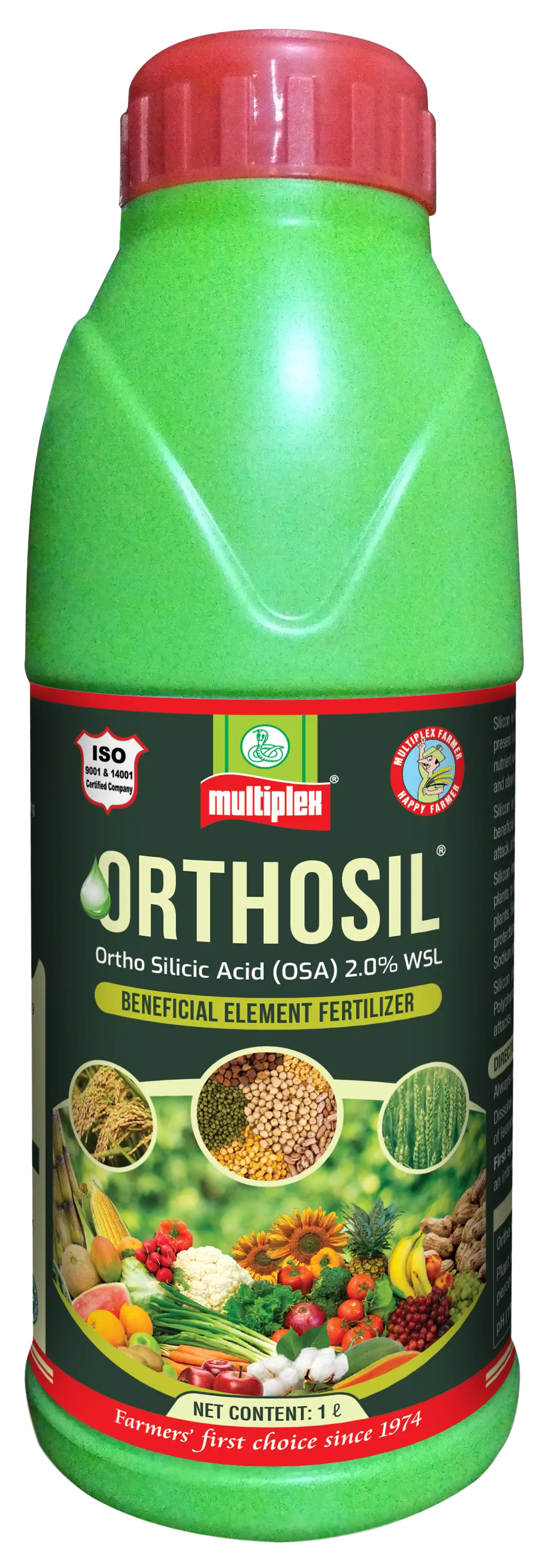
Multiplex Orthosil: Unique formula containing Silica in combination with Boron and Potassium.
Ortho Silicic Acid is a highly available form of silicon that fortifies plant structure by creating a silica barrier in tissues, reducing water loss, protecting against pests and pathogens, and aiding metabolic activities.
Dosage: 1 to 2 ml/liter of water and spray after 30 days of sowing or transplanting. 2 to 3 sprays at an interval of 20 days between the sprays is recommended.
Effective management of heat stress in plants is essential to sustain productivity under changing climate conditions. By combining good agronomic practices plants can better withstand high temperatures. Solutions like silicon-based inputs further strengthen plant tissues, improve water retention, and enhance natural defense mechanisms. A proactive and integrated approach not only minimizes yield losses but also ensures better crop quality and long-term agricultural sustainability.