UPI Payment





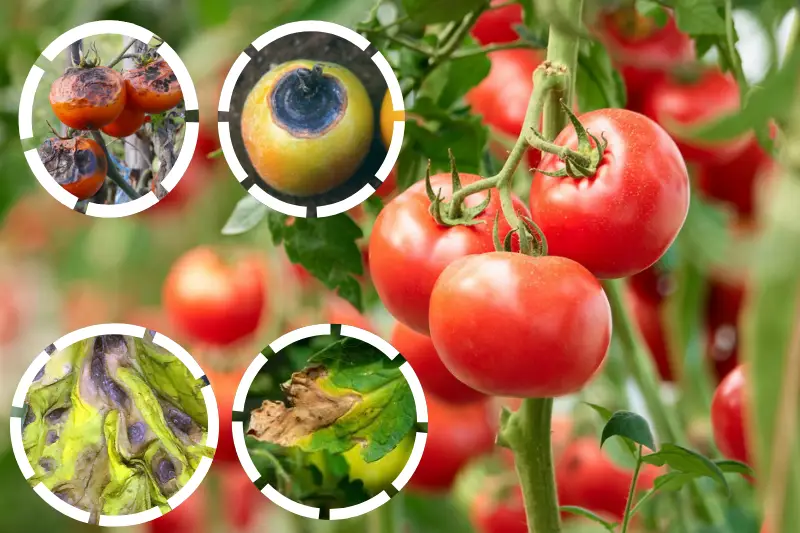
Calcium (Ca) is a vital nutrient for healthy plant growth. Rather than being directly involved in energy production like nitrogen or phosphorus, calcium plays a structural and regulatory role that is essential for plant stability, development, and stress tolerance.
Calcium uptake in plants begins with the absorption of Ca²⁺ ions from the soil through the root system, mainly at root tips and young roots, where specific channels enable their entry into root cells. This uptake is a passive process driven by the movement of soil water into the roots.
Once inside, calcium is transported upward through the xylem along with the transpiration stream, as water loss from leaves pulls dissolved calcium from roots to shoots. Higher transpiration enhances calcium movement, while low transpiration reduces it. Since calcium is immobile in plants, it cannot be redistributed via the phloem and must be continuously supplied to growing tissues.
| Crop / Crop Group | Calcium Deficiency Symptoms observed |
|---|---|
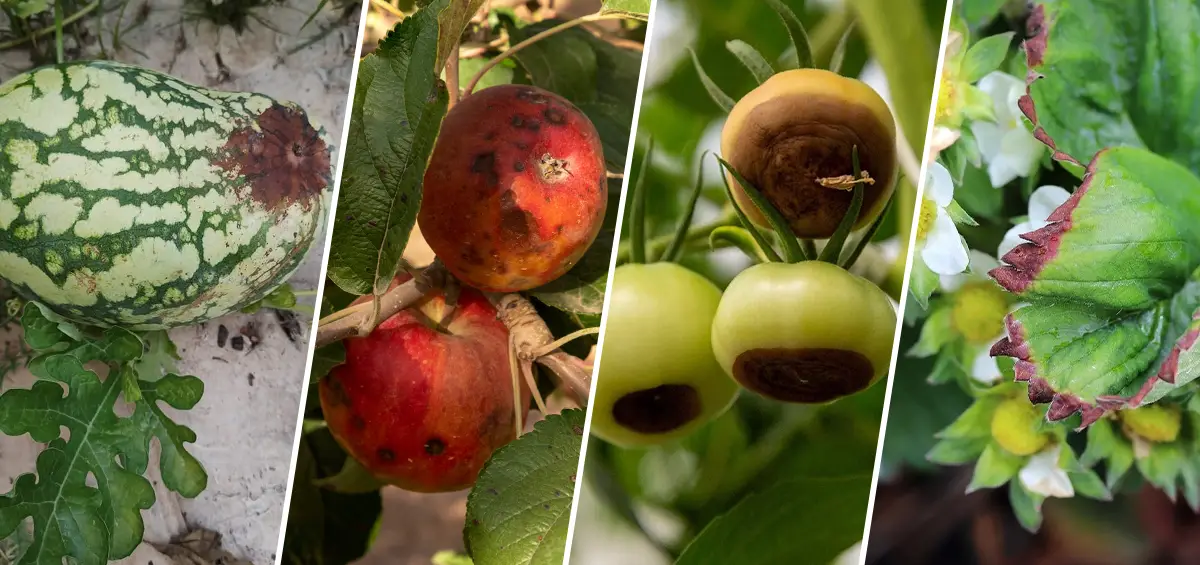
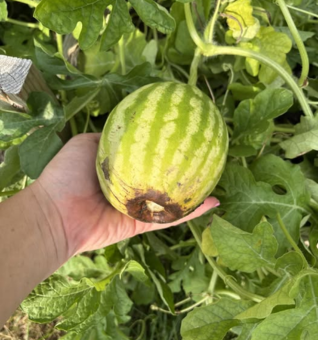
| Tomato, Pepper, Brinjal, Squash, Watermelon | Causes dry, sunken dark spots at the fruit’s blossom end and lowers fruit quality (Blossom-end rot) |
| Cucumber & Melons | Sunken lesions on fruit, leaf cupping, poor tip growth, and root tip death. |
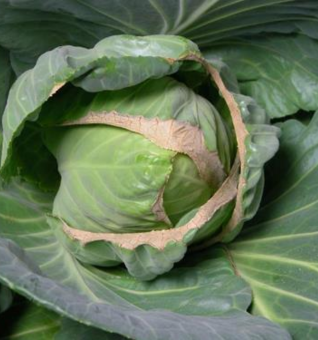
| Lettuce, Cabbage, Brussels Sprouts, Chinese Cabbage, Chicory | Browning and necrosis of young leaf tips and margins (Tip burn) |
| Celery, Fennel | The young inner leaf tissues collapse and turn black, usually at the centre of the plant (Blackheart) |
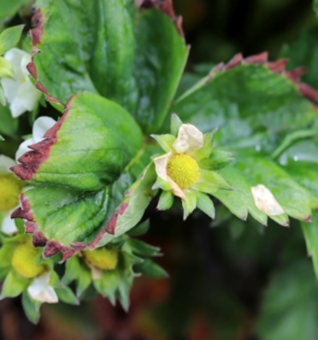
| Strawberry, Berry crops | Browning and dieback of growing tips, leaf margins turn brown with reduced yield and fruit decay. |
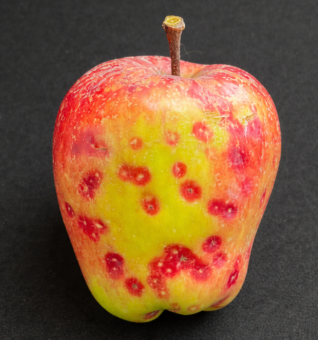
| Apple, Pear | Small brown/black sunken or corky spots on the fruit surface and flesh indicate lower storage quality. |
| Many tree crops (e.g citrus, stone fruits) | Fruit cracking due to weakened cell walls with poor fruit firmness. |
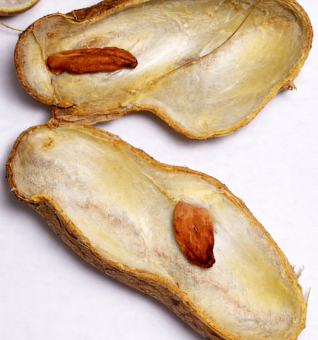
| Groundnut | Pods with poor or no kernel development. |
| Carrot, Potato | Cavity spots, hollow heart, weak tuber cell walls, leading to storage breakdown. |
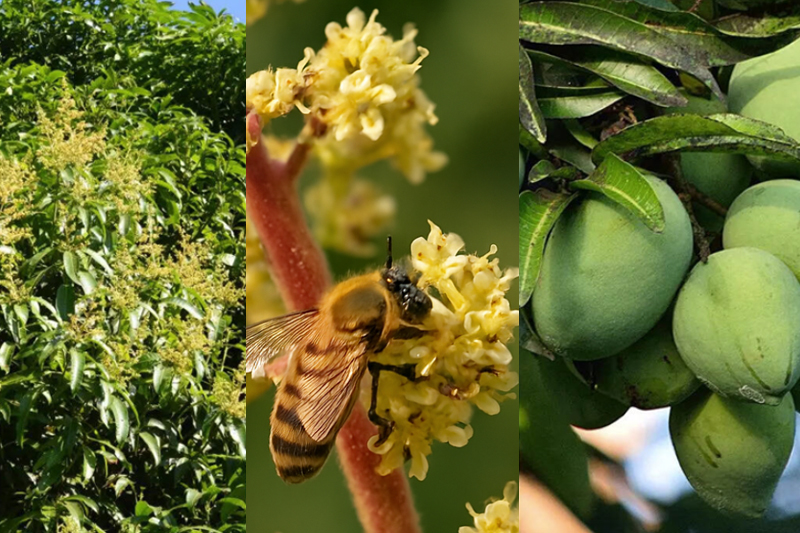
| Citrus, Mango, Banana, Tea | Poor young shoot development, deformed leaves, reduced fruit set, and dry tips of new growth. |
| Ornamental foliage & greenhouse crops | Deformed or curled new leaves, necrotic tips, abortion of flowers, stunted growth and reduced market quality. |
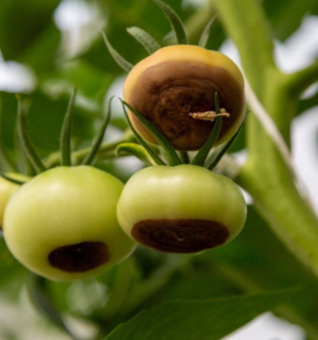
Calcium deficiency in plants is especially common in summer, as high temperatures and low humidity reduce calcium transport within the plant.
In hot, dry weather, plants close their stomata (tiny pores on leaves) to conserve water, which slows down transpiration-driven calcium movement from the roots to growing tissues. Since calcium moves with the transpiration stream and cannot be easily redistributed once inside the plant, this reduced flow under summer stress leads to deficiency symptoms even if soil calcium levels are sufficient.
Additionally, inconsistent soil moisture and stress from high temperatures during summer can further impair root uptake of calcium.
Multiplex offers a wide range of calcium-based fertilizers that provide easily absorbable calcium, which helps to improve cell wall strength, flowering, fruit set, quality, firmness, shelf life, stress tolerance, and effectively manage disorders like blossom end rot and fruit cracking.
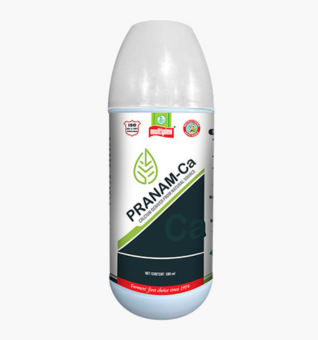
|
Multiplex Pranam Ca
Content: Calcium 11 to 15% derived from a natural source, Nitrogen 11% and Boron 1% Dosage: 3m/L of water |
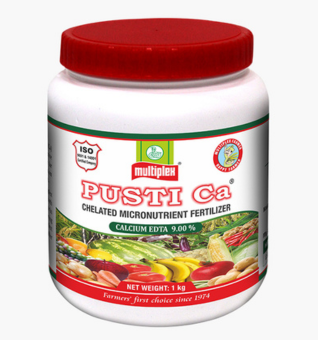
|
Multiplex Pusti Ca
Content: Calcium 9% in EDTA form Dosage: 0.5g/L of water |
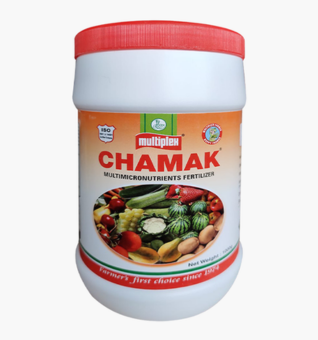
|
Multiplex Chamak
Content: Calcium and Boron Dosage: 3/L of water |
|
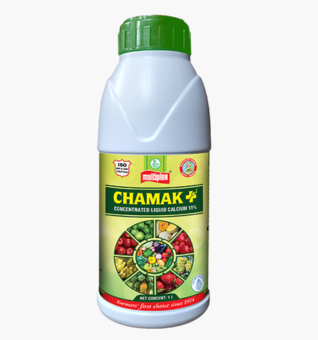
Multiplex Chamak+
Content: Calcium and Micronutrients Dosage: Foliar spray: 3ml/L | Drip irrigation: 1L/acre |
|
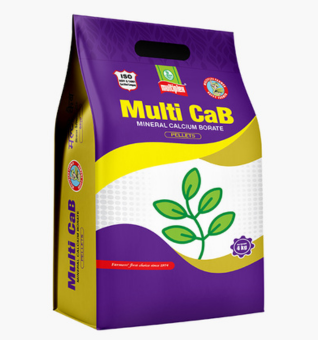
Multiplex Multi Cab
Content: Calcium 16%, Boron 2.5%, Magnesium 3 to 4 %, Potassium 5 %, Sulphur 6 % Dosage: 4Kg/Acre |
|
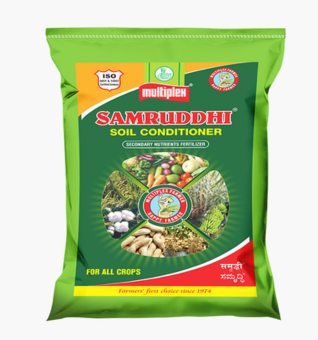
Multiplex Samruddhi
Content: Calcium, Magnesium and Sulphur Dosage: Field crops: 50 Kg/ acre | Plantation Crops: 150-250 g/plant |
Calcium is vital for strong cell walls, membrane stability, root growth, and stress resistance in plants. Deficiency often occurs in acidic, sandy soils, nutrient imbalance, or poor moisture. Summer heat and drought reduce transpiration, limiting Ca movement. Management includes balanced fertilization, proper irrigation, pH correction, and timely calcium application for better yield and quality.