UPI Payment





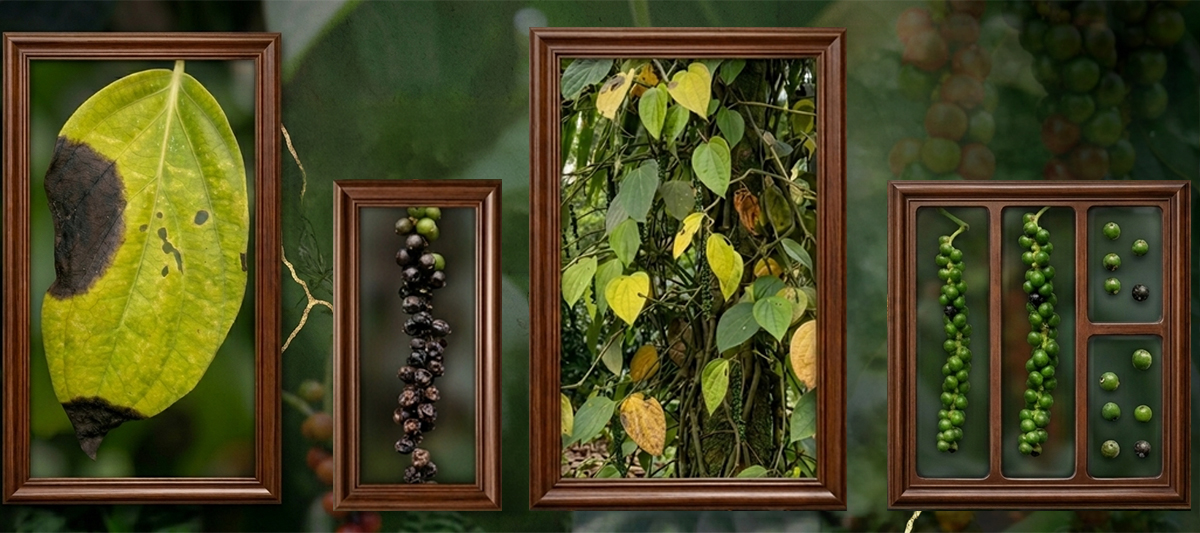
Known as the "King of Spices," black pepper (Piper nigrum) is one of the world's most valuable and widely used spice crops, renowned for its distinctive flavour and extensive medicinal properties. Native to the Western Ghats of India, it has played a significant role in shaping global trade and culinary traditions for centuries.
The dark clouds are rolling in, and the air is filled with scent of fresh rain. While most gardens and plantations eagerly welcome the monsoon, pepper vines may be facing hidden challenges. For black pepper, the monsoon is a double-edged sword. It provides the warm, humid conditions these tropical vines love, but it also creates an ideal environment for devastating diseases such as wilt to thrive.
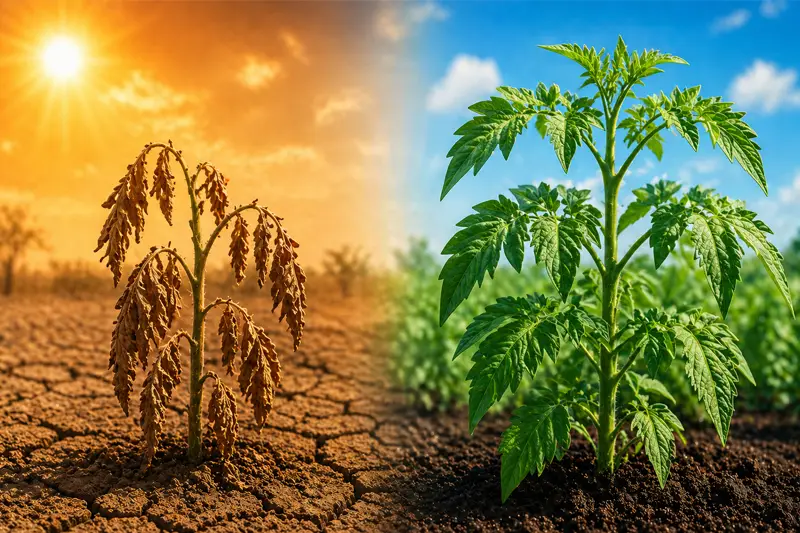
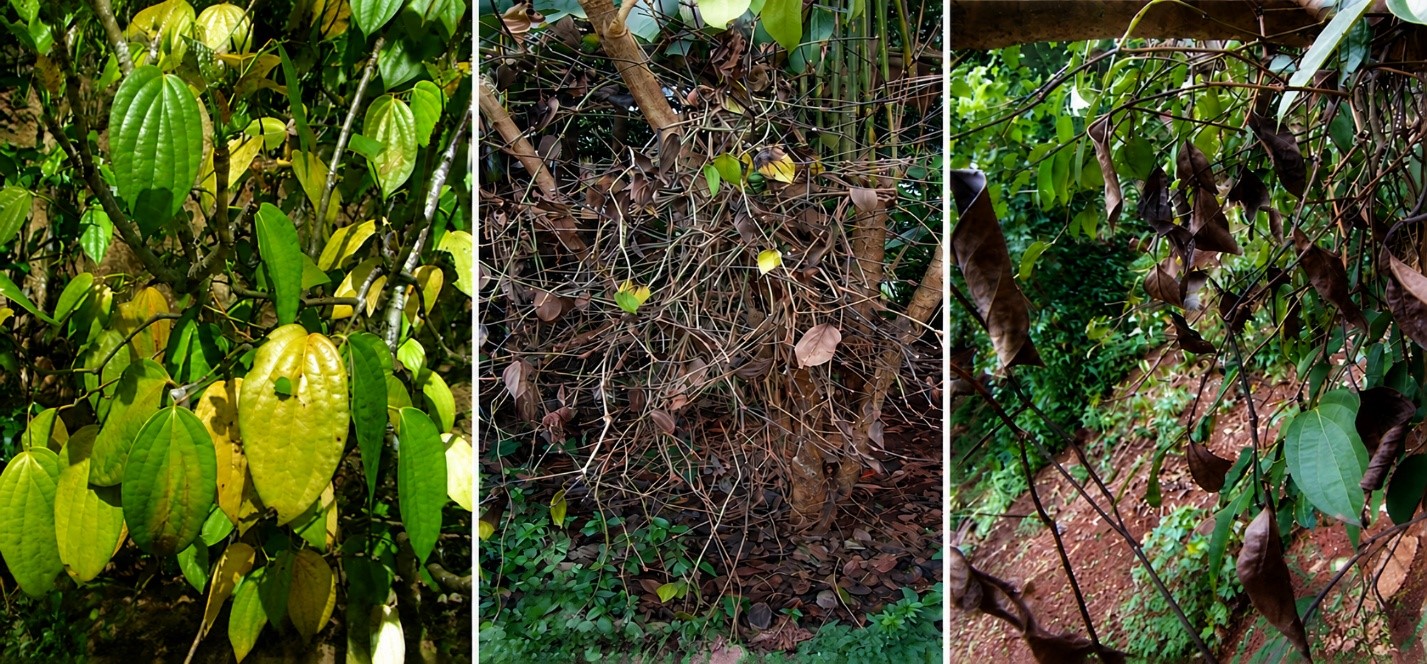
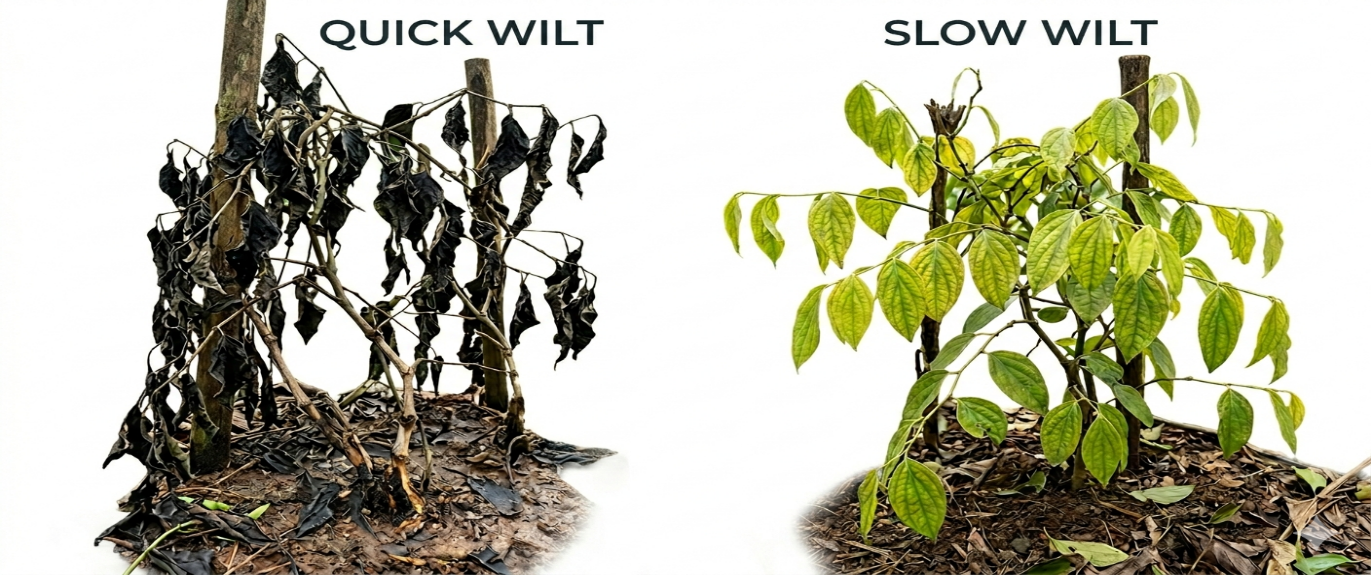
It is a destructive disease complex characterized by the progressive wilting, yellowing, and decline of pepper vines due to impairment of the root and vascular systems. It may occur as quick wilt (foot rot) or slow wilt (slow decline).
Quick wilt (foot rot) is a severe disease caused primarily by Phytophthora capsici. It infects the roots, collar region, and stem, disrupting water and nutrient transport, leading to rapid wilting and death of the vine. The disease develops rapidly under warm temperatures (25–30°C), high humidity, heavy rainfall, and waterlogged soil conditions.
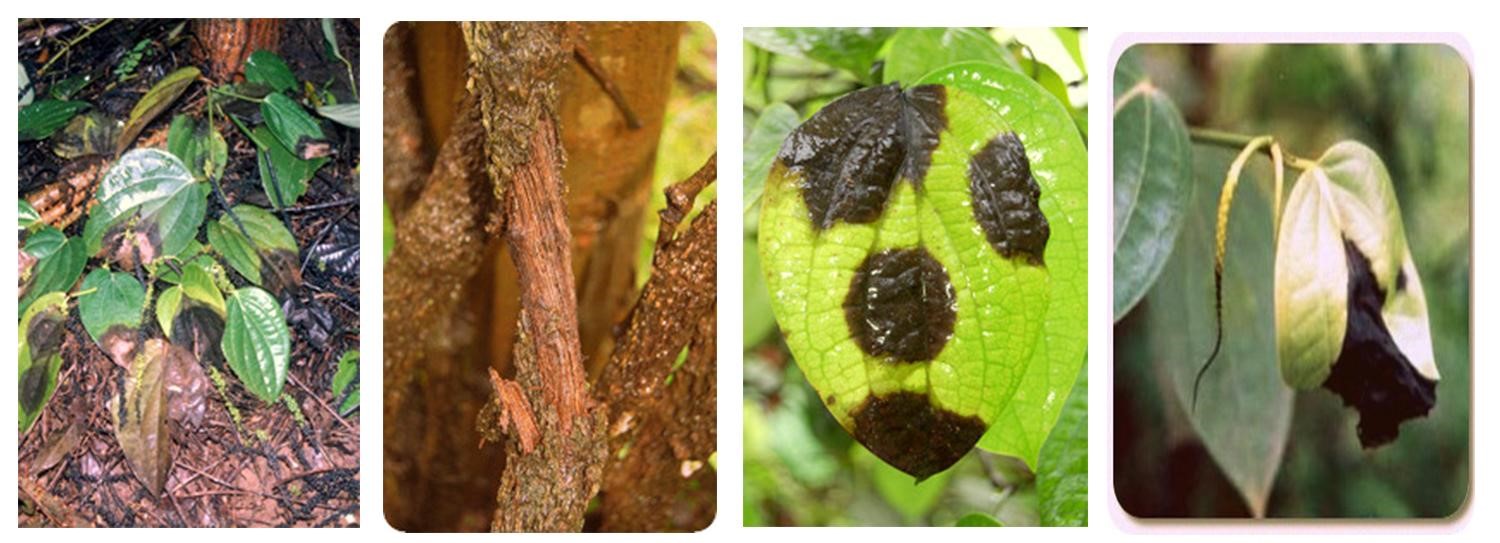
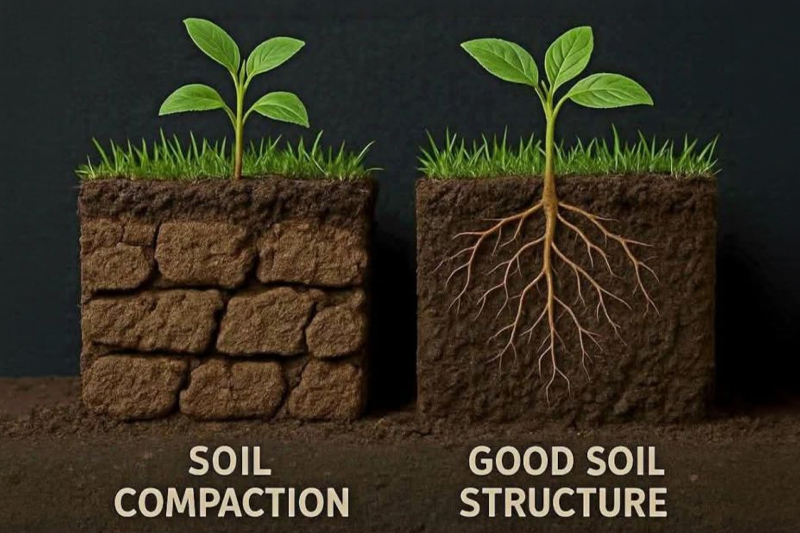
Slow wilt (slow decline) is a gradual disease of pepper caused mainly by the combined action of plant-parasitic nematodes and Fusarium fungi, which damage the root system and reduce water and nutrient uptake. The disease develops under poor soil health, nutrient deficiency, moisture stress, soil compaction, and nematode-infested conditions, leading to a progressive decline of the vine over months or years.
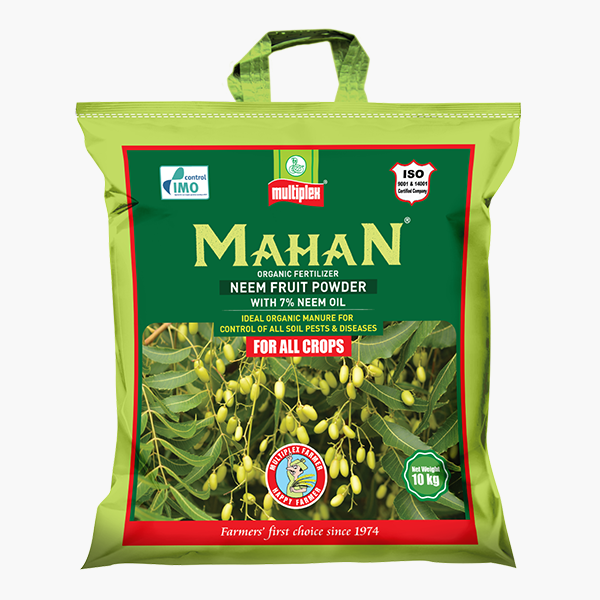
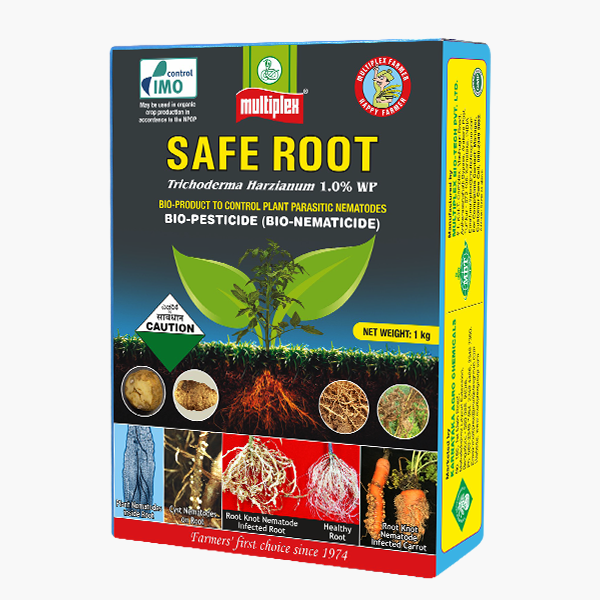
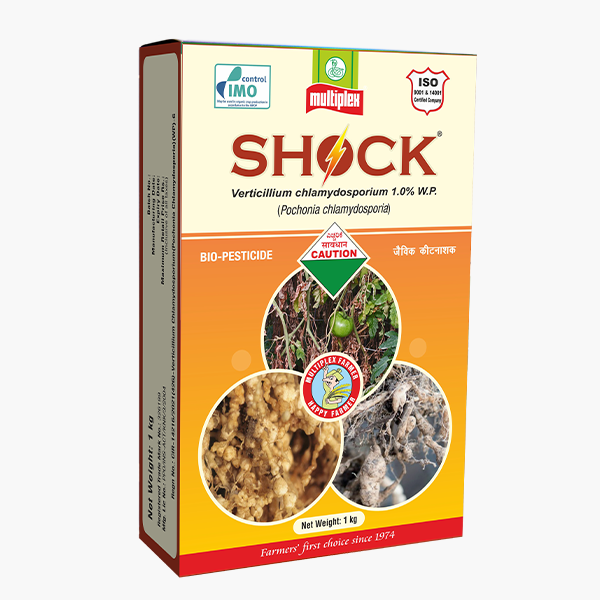
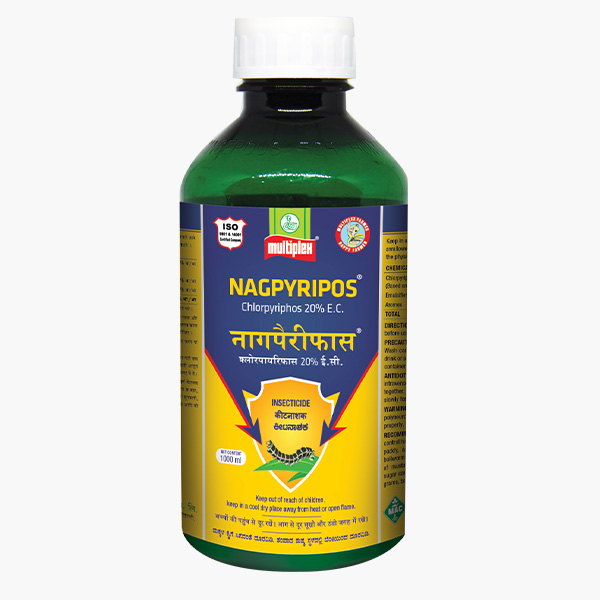
| Feature | Quick Wilt (Foot Rot) | Slow Wilt |
|---|---|---|
| Cause | Phytophthora capsici | Nematodes, root pathogens, and poor soil health |
| Disease Progress | Rapid (days to weeks) | Gradual (months) |
| Symptoms | Sudden yellowing and drooping | Gradual yellowing and stunted growth |
| Root Condition | Severe root and collar rot | Gradual feeder root decay |
| Stem Symptoms | Rotting at stem base | Usually no stem-base rot initially |
| Plant Death | Sudden collapse | Slow decline and eventual death |
| Temperature | 25–30°C | 24–28°C |
| Humidity | >85% RH | 70–85% RH |
| Favourable Conditions | Waterlogging and poor drainage | Soil stress, nematodes, and nutrient imbalance |
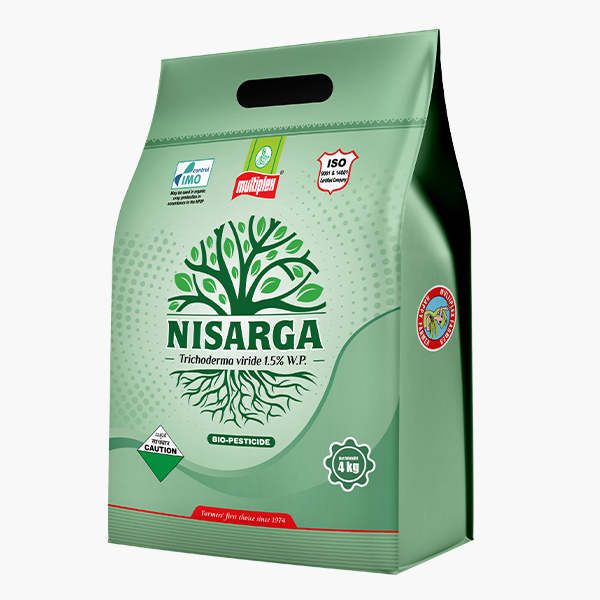
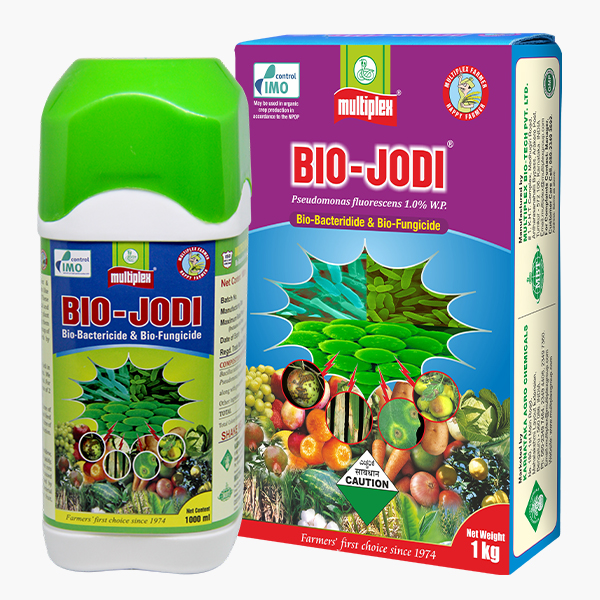
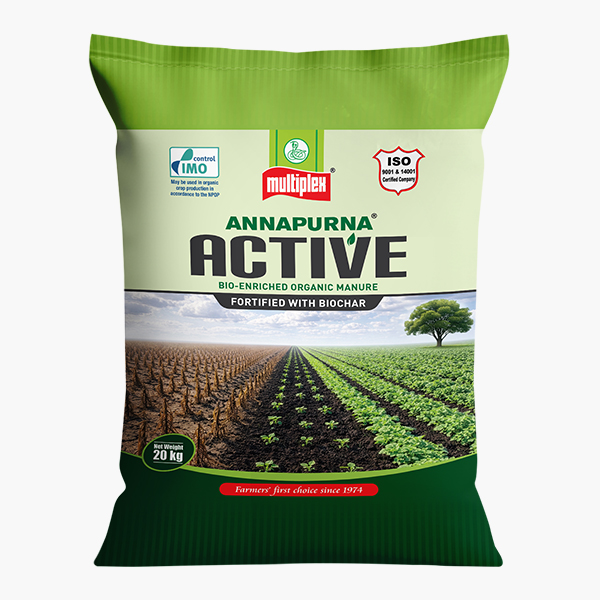
Prevention is the best cure. Black pepper wilt can devastate a plantation quickly, making early prevention the best defence. By focusing on excellent field drainage, keeping the soil aerated, and introducing protective beneficial microbes, we can stop the disease before it starts. Don't wait for vines to show signs of yellowing. Fortify the root zones with healthy organic matter today to secure a thriving, high-yielding spice harvest for years to come.